


Sabastian Sawe didn’t make it to the Berlin Marathon start line. Tigst Assefa barely made it to the finish.
Is there any connection here?
Probably not. Random stuff happens. But you also have to wonder if today’s ultra-aggressive super shoes with thick foams, feathery weights, and highly-angled “rockers” could be a factor.
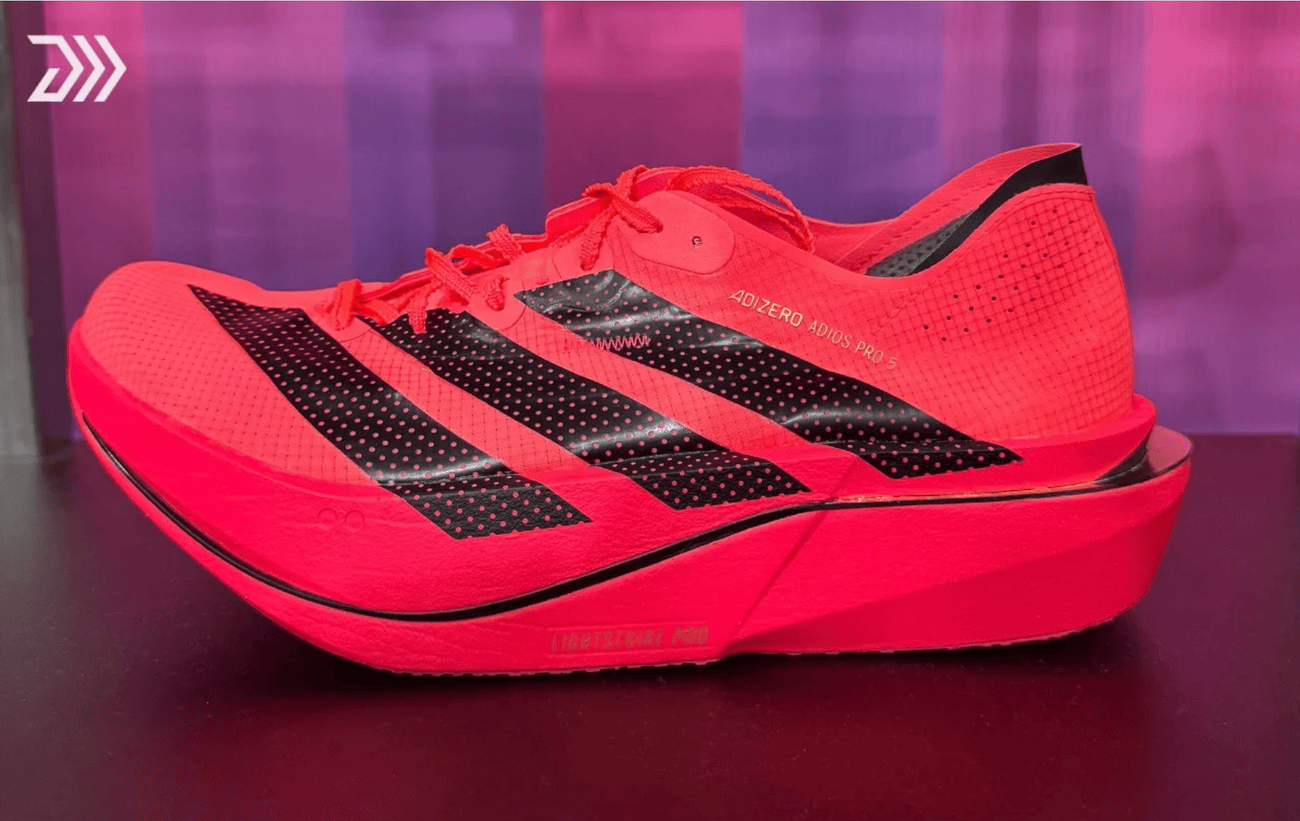
Sawe scratched from Berlin in mid-August, with his agent stating that he had suffered a stress fracture of the tibia in training. Last April, Sawe set a sensational new marathon world record: 1:59:30. He was training to run faster in Berlin.
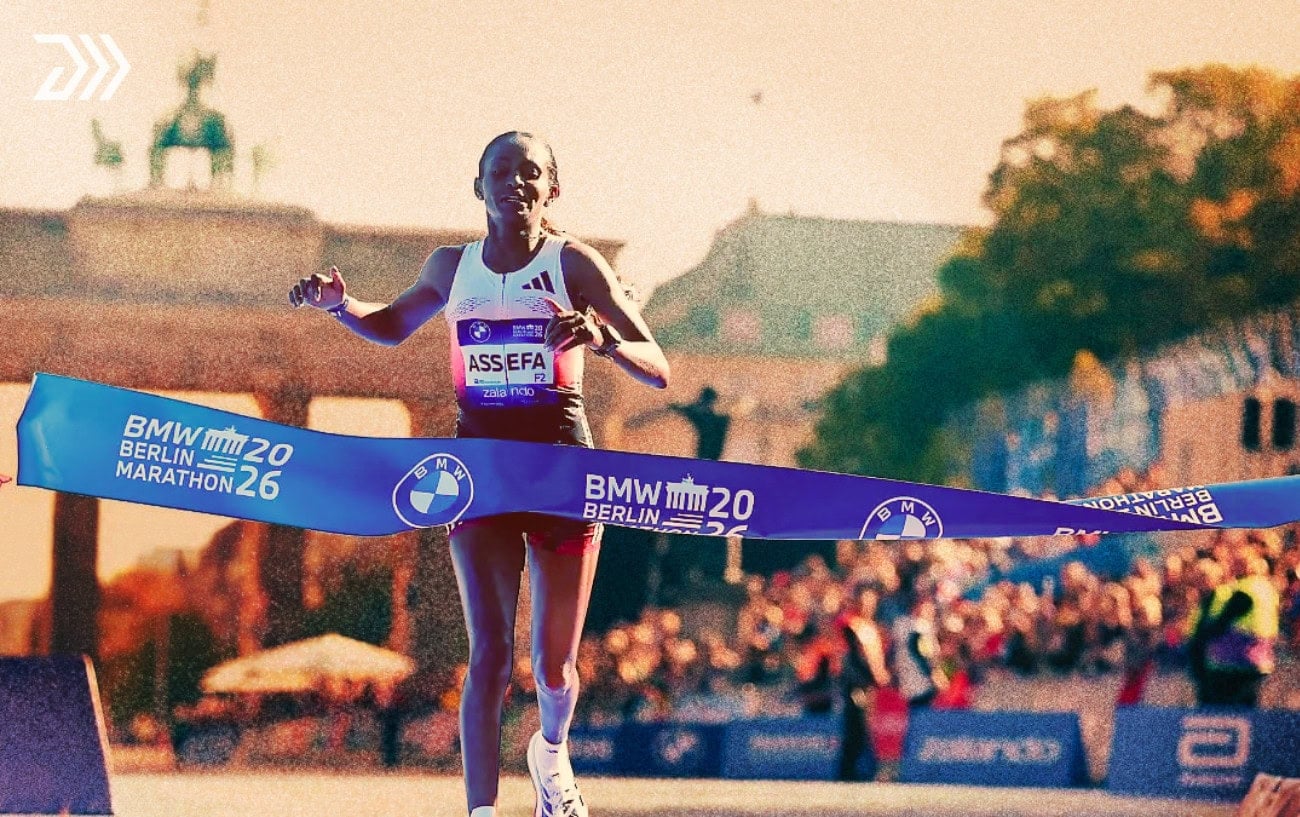
Assefa ran 25 miles of the Berlin Marathon at a 2:09:45 pace, looking smooth and composed. She seemed certain to set a new women’s marathon world record. Everyone was rooting for her, because we all wanted the record books to demote Ruth Chepngetich’s drug-tainted 2:09:56.
Then, pop! A moment later, Assefa grimaced for the first time and limped badly, her right foot compromised. While continuing bravely, she slowed by more than 30 seconds per mile from her previous pace, hitting the tape in 2:11:14.
A personal best, but no world record. Worse, she had suffered a ruptured Achilles tendon. The next day, she was flown to Munich for surgery.
Sawe and Assefa are basically the world’s fastest male and female marathoners. And now both have been struck down by serious injuries.
Have Super Shoes Gone Too Far?
This raises a question every runner, coach, physical therapist, and biomechanics expert is asking: Have super shoes gone too far and reached a point where they may increase injury risk?
To address this critical issue, a journal named PM&R: The Journal of Injury, Function and Rehabilitation recently published a paper titled “Advanced footwear technology versus minimalist footwear for injury prevention and performance in runners.”1Bruneau, M. M., Hollander, K., Kipp, S., Lieberman, D. E., Soo Hoo, J., Saxena, A., Zech, A., & Tenforde, A. S. (2026). Advanced footwear technology versus minimalist footwear for injury prevention and performance in runners. PM&R, 18(S2). https://doi.org/10.1002/pmrj.70149
The paper follows a Point-Counterpoint format, allowing experts on both sides of the debate to present their views. The authors included a half dozen heavyweights in running theory and research, including Daniel Lieberman, Adam Tenforde, Shalaya Kipp, Amol Saxena, and others.
One group argued that minimalist shoes rest on human evolutionary biology and must be the right approach. The other group said there’s no evidence that super shoes increase injuries, and they may actually decrease tissue damage, making them protective.
Here’s a quick summary of each group’s position.
The Case For Minimalist Shoes
For several million years, humans ran and walked the planet without shoes. The first modern shoes appeared about 10,000 to 40,000 years ago. Then came the first wave of road running shoes 50 years ago. Super shoes have only been around for 10 years.
Do the math. What kind of footwear have humans evolved to wear?
What’s more, “Minimalist footwear is superior in improving proprioception and strengthening foot intrinsic muscles, thereby reducing the risk of running-related injury.”
Minimalist shoes boost running economy with their low weight, while they also enhance foot muscle capacity that “improves medial longitudinal arch stiffness and control of midfoot deformation, supporting both propulsion efficiency and possibly injury resistance.”
In addition, minimalist shoes encourage a midfoot/forefoot strike and a shorter, quicker stride. This “may reduce impact-related musculoskeletal stress.” Shoes with thick heels, by contrast, encourage a hard heel impact.
Shorter strides may reduce injury rates, according to a recent study of marathon-training runners. It found that about 35.0% of runners with a stride rate below 159 incurred an injury. For those with a stride rate greater than 180, the injury rate fell to 24.8 percent.2Coss, J. P. (n.d.). CADENCE AND THE ASSOCIATION WITH INJURY DURING MARATHON TRAINING: AN RHC STUDY [Research paper (presentation slide)]. Retrieved September 30, 2026, from https://static1.squarespace.com/static/65a6f404511e5c4d6756a404/t/69fa52d26ac16f02ebf8cd77/1778012884457/Coss+-+Cadence+and+the+Association+with+Injury+During+Marathon+Training.pdf
The Case For Super Shoes
There was a brief, intense interest in minimalist shoes around the 2010s, but since then runners have shifted their interest “back toward footwear with maximal cushioning for training and performance.” This happened because minimalist shoes were too uncomfortable for most runners on hard surfaces, and because many reports linked rapid switches to minimalist shoes with foot injuries.
Super shoes are desirable because they achieve “an ideal balance of adequate cushioning without an increase in shoe weight.” Super shoes produce positive effects through “complex interactions among components rather than the effect of any single layer. For example, the carbon fiber plate doesn’t increase energy return “but rather provides stability needed on thick compressive foam.”
While questions regarding biomechanical changes and injury rates have been “relatively unexplored,” it’s plausible that super shoes may “enhance training by improving recovery” and “may in theory reduce tissue damage.” Many runners have anecdotally reported that their legs feel fresher after hard workouts in super shoes than in normal or minimalist shoes.
This position is strengthened by a recent study of 661 runners training for the 2024 New York City Marathon. Those who often or always trained in super shoes had an injury rate of 31.0 percent. Injuries were much more common in runners who never wore super shoes: 48.9 percent.3Campbell-Potter, M. (n.d.). The Association of Carbon-Plated Shoes with Running-Related Injuries During New York City Marathon Training: An RHC Study [Research report]. Retrieved September 30, 2026, from https://static1.squarespace.com/static/65a6f404511e5c4d6756a404/t/680e33506384346a07b9e19c/1745761105353/Campbell-Potter+-+Association+of+Carbon-plated+Shoes+with+RRI+during+NYC+Marathon+Training.pdf
So Which Shoe Should You Choose?
In a group summary statement, the super shoes versus minimalist shoes paper concluded: “Although a desired answer for the ‘best shoe’ is often sought by runners, clinicians, and others, we could not conclude that there is a superior form of footwear.”
In other words, the experts don’t know the answer yet, and aren’t about to offer you a simple, universal rule. They’ll only add: “Practically speaking, minimalist footwear may provide foot-strengthening gains, while AFT, (advanced footwear technology), can be used for select training efforts and racing. Many questions persist, and footwear technology will continue to change.”
For now, the best advice remains the “comfort filter” approach first advocated by Benno Nigg.
When buying new running shoes, select the ones that feel most comfortable and cushioned when you give them a short test. Trust your feet and your intuitive judgment. These shoes are more likely to work well for you than anything you choose based on someone else’s review and opinions.
References
RunClub — Free
Join 300,000+ runners in RunClub
Free training plans for every distance, a daily running game, exclusive coaching content, and a real community of runners. Create your free account in 20 seconds — no card.
Already a member? Log in →








Start the conversation