


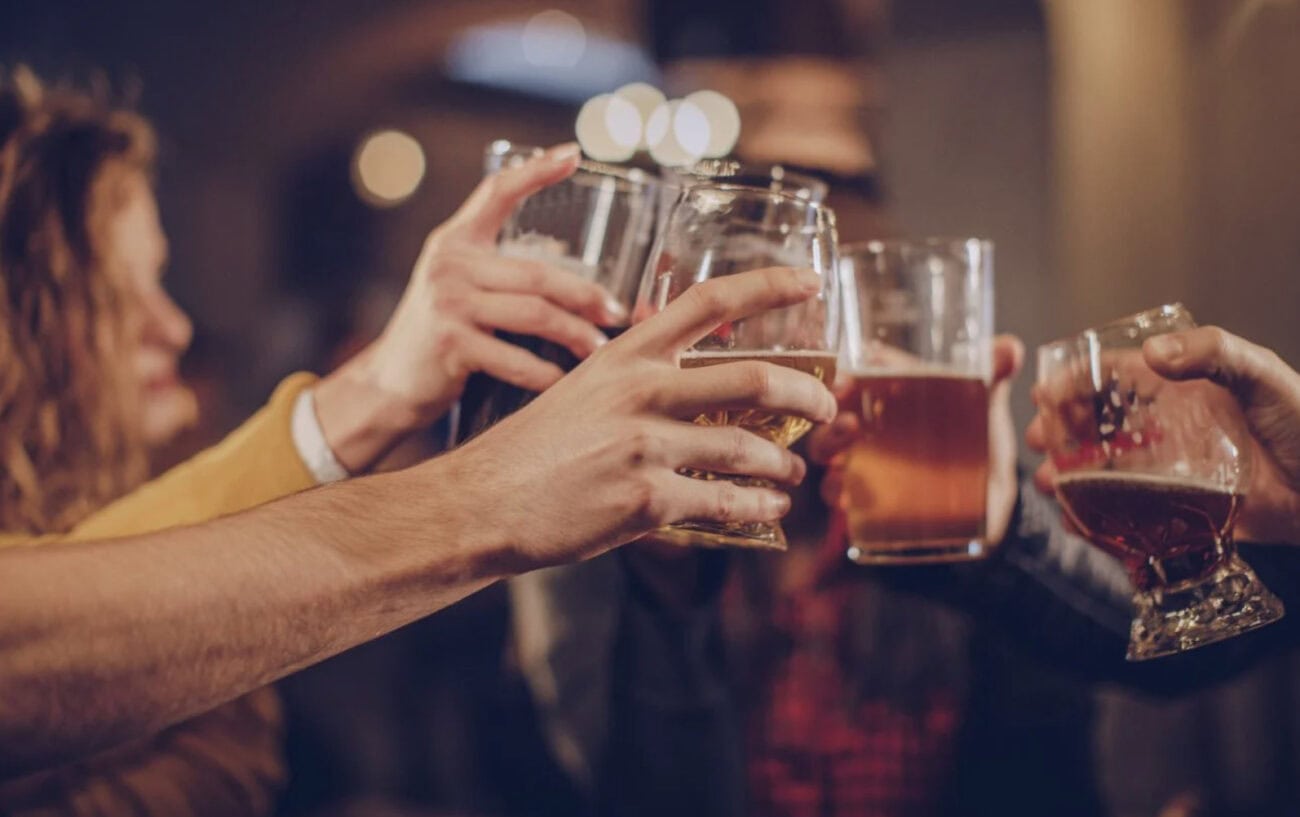
There’s a common idea (especially in endurance circles) that being “fit enough” can buffer a lot of questionable lifestyle choices. Miss a little sleep? Train through it. Eat a bit too much junk? Burn it off. Have a few drinks? You’re a runner, you’ll be fine. But how far does that protection really go, especially when it comes to alcohol?
A new paper from the Norwegian HUNT Study1Nauman, J., Ingeström, E. M. L., Tari, A. R., & Wisløff, U. (2025). Running from Death: Can Fitness Outpace Alcohol’s Harm? Changes in Alcohol Intake, Fitness and All-Cause Mortality in the HUNT Study, Norway. Sports Medicine (Auckland, N.Z.), 10.1007/s40279-02502360-w. https://doi.org/10.1007/s40279-025-02360-w tackles this question by asking not just how alcohol and fitness relate to mortality, but how changes in both over a decade interact to shape long-term survival.
The researchers analyzed data from nearly 25,000 “healthy” Norwegian adults who participated in two large health surveys about ten years apart (HUNT2 in the mid-1990s and HUNT3 in the mid-2000s). Participants were then followed for around 17 years.
Alcohol intake was self-reported and categorized into three groups: abstainers, those drinking within recommendations (≤140 g/week for men, ≤70 g/week for women, or about 10 and 6 standard drinks per week, respectively), and those drinking above those limits. Cardiorespiratory fitness was estimated using a validated non-exercise equation incorporating age, waist circumference, resting heart rate, and physical activity. Participants were classified as either “fit” (top 80% for age and sex) or “unfit” (bottom 20%).
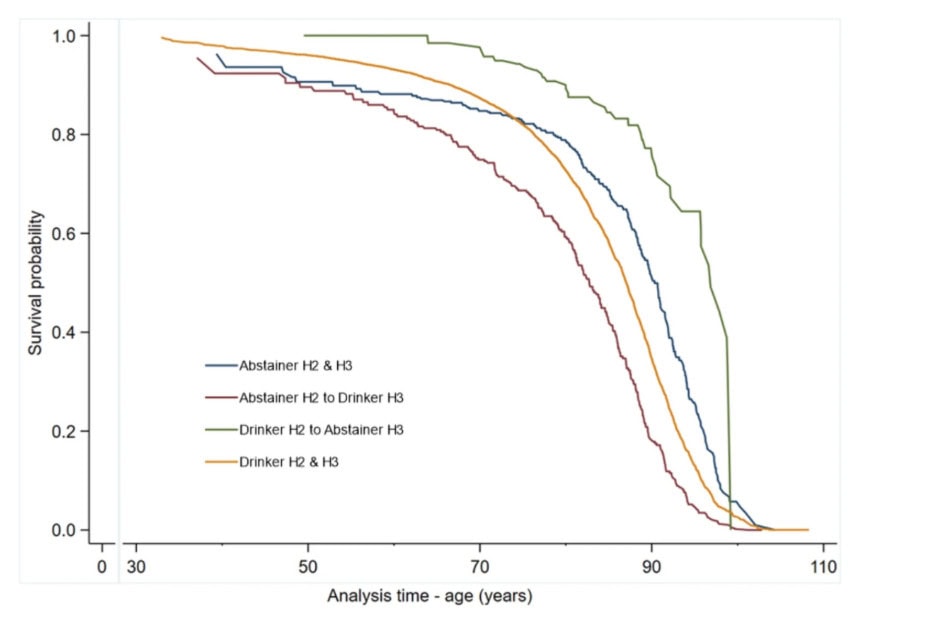
Increasing alcohol intake over time was generally associated with higher mortality risk. People who went from abstaining to drinking within recommendations had about a 20% higher risk of death compared to those who stayed abstinent. Those who increased from moderate to above-recommended intake also trended toward higher risk.
But the more interesting and more relevant finding was what happened when fitness entered the picture.
Across nearly every alcohol category, people who remained in the lowest 20% of fitness for their age and sex had a substantially higher mortality risk. In contrast, people who stayed out of that bottom fitness bracket—regardless of whether they drank or changed their drinking—had much lower risk.
To put numbers on it: compared to people who stayed fit and abstained from alcohol, those who stayed unfit had a 46–68% higher mortality risk even if they drank within recommended limits. Meanwhile, individuals who remained fit showed little to no increase in mortality risk across most alcohol-change categories.
Perhaps the most striking result was this: a decline in fitness over the decade predicted mortality more strongly than changes in alcohol intake itself. Going from fit to unfit substantially increased risk—even among abstainers. In other words, losing fitness was worse for long-term survival than many changes in drinking patterns.
What this means for runners
Avoiding low fitness may matter more for long-term health than optimizing everything else. Staying out of the bottom fitness bracket appears to blunt many risks, including those associated with alcohol. That doesn’t mean alcohol is harmless, or that training gives you a free pass. But if you’re choosing where to spend your limited energy, maintaining fitness is likely a higher-leverage investment than obsessing over small differences in alcohol intake… unless you’re partaking in harmful consumption patterns (which everyone must determine for themselves).
RELATED ARTICLE:
References
RunClub — Free
Join 300,000+ runners in RunClub
Free training plans for every distance, a daily running game, exclusive coaching content, and a real community of runners. Create your free account in 20 seconds — no card.
Already a member? Log in →







Start the conversation