


Foam rolling has become a runner’s ritual. You finish a hard session, flop on the living room floor, and start hunting for that “good pain” in your quads and calves like it’s a required step in the recovery recipe. Now add a vibrating roller—same idea, but with a buzzing motor that promises to melt soreness faster and get you back to training sooner.
It sounds plausible. But does the data hold up to the hype?
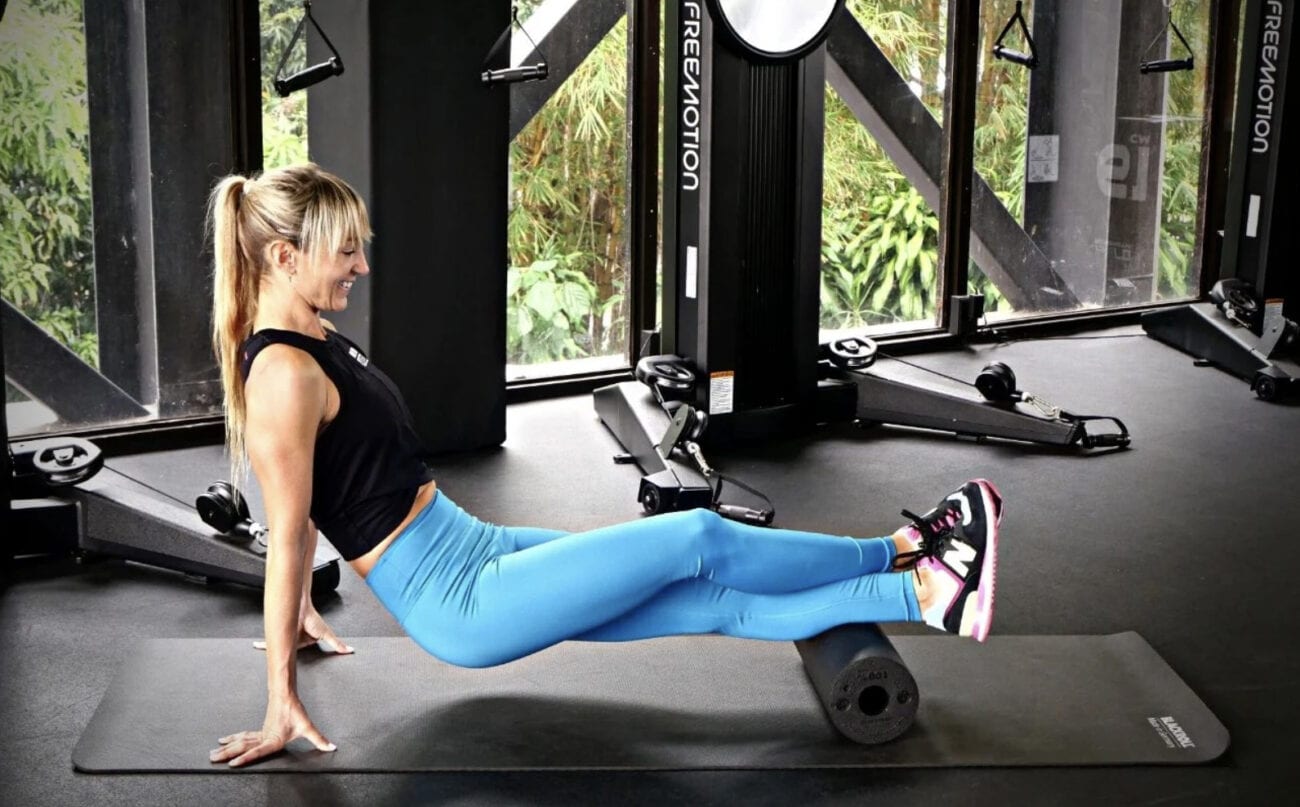
A recent study put normal foam rolling, vibrating foam rolling, and basic static stretching head-to-head to see which is best for muscle recovery. The answer may surprise you.1Wu, C.-W., Huang, C.-H., & Chang, N.-J. (2026). Vibration Rolling, Non-Vibration Rolling, and Static Stretching for Delayed- Onset Muscle Soreness on Physiological Changes and Recovery of Athletic Performance in Runners. Journal of Sports Science and Medicine, 149–158. https://doi.org/10.52082/jssm.2026.149
The researchers recruited 18 experienced adult runners (ages 20–40; “experienced” meant they’d finished a half marathon) and used a crossover design, meaning each runner did all three recovery conditions on separate occasions:
- Vibration rolling (VR)
- Non-vibration rolling (NVR)
- Static stretching (SS)
To reliably trigger delayed-onset muscle soreness (DOMS), participants first did a downhill treadmill running protocol designed to create eccentric muscle damage. Immediately after the run—importantly, before soreness really kicks in—the runners performed a standardized 20-minute recovery intervention targeting both legs: glutes, quads, hamstrings, and the front/back of the lower leg. In the VR condition, the roller vibrated at 28 Hz. Each muscle region got repeated short bouts (30 seconds per set, multiple sets), keeping the total time matched across conditions.
They assessed recovery at three time points: baseline, 24 hours, and 48 hours later.
And they looked at a mix of outcomes “inside the body” and those related to performance, including muscle damage and inflammation, flexibility, muscle stiffness, vertical jump performance, and balance.
Vibration rolling did not outperform regular rolling or static stretching in terms of outcomes runners actually care about—muscle damage signals, inflammation signals, or performance recovery—over the 48-hour window.
The downhill protocol did what it was supposed to: it produced a DOMS-like response, most clearly shown by a muscle damage marker called creatine kinase (CK) rising at 24 hours, then starting to return to baseline by 48 hours.
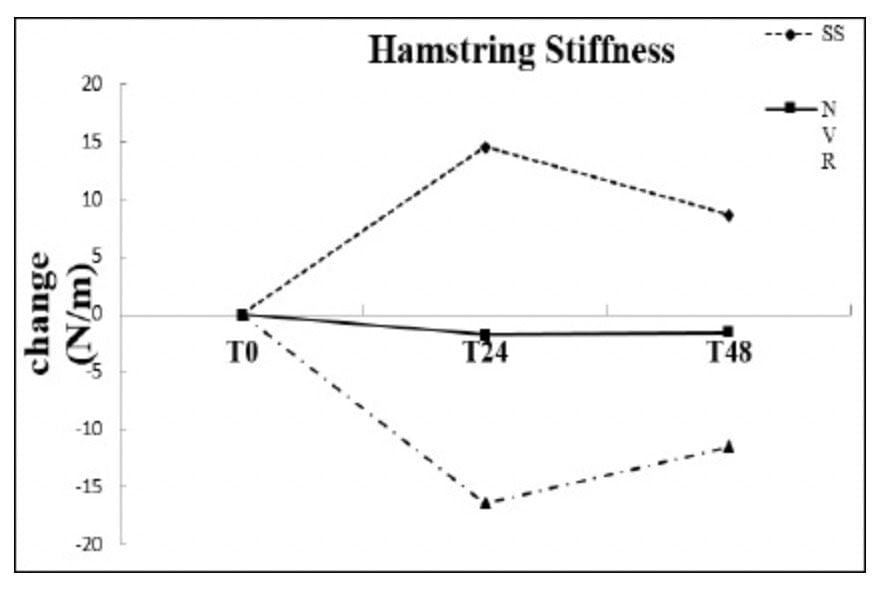
But when they compared recovery strategies, the patterns were basically the same. Inflammatory markers (CRP and IL-6) didn’t meaningfully change across time in a way that separated the interventions. Muscle stiffness didn’t show a clear improvement attributable to any one method. Jump height didn’t rebound faster with vibration rolling. Flexibility improved over time, and balance measures improved over time, but those improvements appeared to reflect the body’s natural recovery rather than anything special about vibration.
What this means for runners
If you love your vibrating roller, this study doesn’t give you a strong reason to throw it out—but it also doesn’t support the idea that vibration (or even foam rolling for that matter) is a recovery cheat code after a DOMS-inducing run. In the first 48 hours after downhill-style damage, vibration rolling looked a lot like regular rolling and even plain static stretching. You may feel better in the moment, but your muscle-damage and inflammation signals, plus basic performance markers like jump and balance, mostly follow their own timeline. For training decisions, I’d treat rolling (vibration or not) as an optional comfort tool—fine if it helps you relax and keeps you consistent. But put your real recovery budget into things like sleep and diet (we know those work!)





I’ve been running marathons for 12 years. I’ve ran Boston 7 times. I have regularly stretched and foam rolled after runs and 4-5 times per week. I quit all of this last November. I ran the Cowtown marathon last Sunday. By Tuesday, I had no soreness in my legs and by Wednesday I was running again. Cycling, creatine, a good diet and good sleep worked for me. Thanks for the article. It further convinces me stretching and foam rolling are completely unnecessary. I also believe they contributed to some lingering injuries I had over the years.