


All marathon runners obviously need a well-trained body to achieve their goal performance. But you also need a strong mind.
Recent advances in sports psychology now provide evidence-based mental strategies that didn’t exist a decade ago. Here are five of the best, easiest, and most effective, based on my review of the scientific research.1Meijen, C., Brick, N. E., McCormick, A., Lane, A. M., Marchant, D., Samuele Maria Marcora, Micklewright, D., & Robinson, D. T. (2023). Psychological strategies to resist slowing down or stopping during endurance activity: An expert opinion paper. Sport & Exercise Psychology Review, 18(1), 4–37. https://doi.org/10.53841/bpssepr.2023.18.1.4
I’ve listed all five along with short, clear summaries of each. If you want to dig deeper, follow the references at the end of the article.
Do top marathon runners actually rely on mental strategies? Absolutely. In explaining his American record of 2:04:43 in Chicago, Conner Mantz gave credit to a sports psychologist who told him to think more about the “process” of competitive racing than his mile splits.
This approach worked for Mantz. One or several of the following methods will likely work for you.

#1: The Magic Of “If-Then” Planning
My favorite marathon trick is an approach called “Mental Contrasting.” I like it because it requires you to seriously consider every moment of your marathon before you actually run it. Then, it provides you with the necessary tools on race day itself.
Mental contrasting was developed by psychologist Gabriele Oettingen to help people achieve their goals. She eventually wrote a book titled Rethinking Positive Thinking.
In Oettingen’s view, positive thinking is nice … but limited. I mean, you don’t live in Camelot, you don’t wear rose-colored glasses, and, unless you are some kind of endurance freak, you don’t run 26.2 miles without hitting a few bumps in the road.
Oettingen believes you should acknowledge that stuff will happen and then prepare your reaction. For example, worried that you’ll hit the wall and slow down the last six miles?
Yes, of course you are. So make an If-Then plan now.
You might tell yourself: “Okay, if I start slowing down, I’ll stay relaxed and I won’t panic. Instead, I’ll take a little more fluid at the next stop, and be sure to consume that extra gel I’ve been carrying.”
Every marathon presents plenty of potential “bad news” scenarios. You can’t just ignore them and wish them away. But with proper planning, you can limit their impact and still run your best.
#2: Learn When To Associate Or Dissociate
One of the earliest and most famous studies in marathon psychology was published way back in 1977 by University of Wisconsin professor William Morgan. He titled his paper: “Psychologic Characterization of the Elite Distance Runner.”
Morgan concluded that elite runners are different from recreational runners. Midpackers tended to focus on external events: the crowd, their daydreams, the passing environment, their favorite music, and so on. This finding made sense to everyone. Recreational runners wanted to avoid the discomfort of marathons, so they shifted their focus elsewhere.
Elites did the opposite. They focused inward on their breathing, muscle soreness, temperature, and other bodily sensations. This is how they controlled their running to attain peak performance.
Morgan’s findings have evolved through the years. Now, marathon psychologists believe in a more nuanced view. It’s important to have both tools in your armament: the ability to go external and the ability to dive deep inside. The crucial factor is knowing when to do each.
Here’s the general rule: Distract yourself early; focus later. Say you’re running the New York City Marathon. In the early miles, you can enjoy the view from the Verrazano Narrows Bridge and the sights, sounds, smells, and people of Brooklyn.
Much later, in Harlem and back into Manhattan, put on your blinders and concentrate. Check your stride and form, monitor your perceived effort, and consider your fueling needs.
Now it’s time to get the job done. That’s when you want your brain fully engaged.

#3: Pay Attention To Your Grammar
This strategy is absurdly simple. Any time we can use those two words together in a marathon-improvement story, it has to be a good thing, right?
Of course, you’re skeptical. You can’t think of anything else about marathon running that’s absurdly simple.
But go ahead. Keep reading.
In 2019, a British research team decided to test a strange and trivial-seeming self-talk system that had been proven effective in non-sports situations.2Blanchfield, A. W., Hardy, J., De Morree, H. M., Staiano, W., & Marcora, S. M. (2014). Talking yourself out of exhaustion: the effects of self-talk on endurance performance. Medicine and Science in Sports and Exercise, 46(5), 998–1007. https://doi.org/10.1249/MSS.0000000000000184 Previous studies had found that subjects who used the second person (“You can do this.”) attained better results than those using the first person (“I can do this.”).3Hardy, J., Thomas, A. V., & Blanchfield, A. W. (2019). To me, to you: How you say things matters for endurance performance. Journal of Sports Sciences, 37(18), 2122–2130. https://doi.org/10.1080/02640414.2019.1622240
To investigate with athletes, the researchers conducted a randomized, controlled trial of the “You” vs “I” approach. Result: “Second person self-talk generated significantly faster time-trial performance than first person self-talk.”
In other words, when the going gets tough, reinforce your commitment by telling yourself, “You can do this. You have trained for months for this day. You’re tough. You’re going through a difficult patch now, but you’ll soon come out the other side. You can still reach your goal.”4McCormick, A., Meijen, C., & Marcora, S. (2018). Effects of a Motivational Self-Talk Intervention for Endurance Athletes Completing an Ultramarathon. The Sport Psychologist, 32(1), 42–50. https://doi.org/10.1123/tsp.2017-0018
Don’t say, “I can do this.” Say, “You can do this.”
This absurdly simple approach can have a big payoff.
#4: Smile A Mile, Or Maybe 26
If someone asked you to sketch what a runner’s face looks like at 20 miles in a marathon, you’d pencil in a grimace or a gritty, agonized look. It might even recall the famous hollow cheeks fright face of Edvard Munch’s “The Scream.”
Think about this pained expression the next time you hit 20 miles. But make sure you do the opposite. Force yourself to smile instead.
Why? Research has shown that smiling improves your running economy. It helps you feel better and run more efficiently. Your perceived effort will decline.
One study found that smiling could boost running economy by two to three percent. That’s as much as you get from a pair of super shoes, and a smile doesn’t cost $250. The paper concluded: “Periodic smiling may be an effective attentional cue to enhance running performance.”
I’m not sure anyone would believe this smile effect if it weren’t for two-time Olympic marathon champ and former marathon world record holder Eliud Kipchoge. Near the end of his best marathons, Kipchoge often broke into a tight, wispy smile.
Was this a deliberate tactic on his part? We don’t know for sure. We only know that Kipchoge is a student of all things related to marathon greatness, and also a believer in running relaxed and confident.
The fact is, you can’t feel bad when you’re smiling. It’s a connection that’s ingrained from childhood. You frown when you’re sad and upset. You smile when you’re happy and positive.
Which is exactly how you want to feel when you’re in mid-marathon.

#5: Prepare Your Motivational Mantra(s)
I know few runners, perhaps none, who don’t appreciate a great inspirational quote. That’s why you can find entire books filled with such phrases, not to mention thousands of internet pages brimming with the same.
Motivational mantras keep us going, no doubt about it. They work during the long, slogging weeks of training and also on race day when you need a pick-me-up right now.
I’ve long relied on a personal favorite from American marathon great Ryan Hall. He found the strategy so successful that he used it to title a book, Run The Mile You’re In.
Hall’s mantra suggests that you shouldn’t imagine the full marathon distance in its entirety. Twenty-six miles? OMG. Instead, just visualize one mile at a time. This practice, termed “chunking,” is a favorite among psychologists.
I also appreciate a mantra often credited to top ultra runner, Amelia Boone. When her races turn difficult, she doesn’t wish she were somewhere else. Instead, she invokes the idea that only a very strong, healthy woman gets to embrace big challenges in life.
Boone tells herself, “You get to do this.” Most people don’t. That makes you one of the lucky ones.
If you respond best to humor, you’ve got many good alternatives. How about: “Pain is just French for bread”? Or: “Any idiot can run, but it takes a special kind of idiot to run a marathon”?
Of course, the best mantra is one that’s personal and emotional. We run best when we run for someone or something larger than ourselves. That’s why charity running is so popular.
I can’t give you this mantra. You have to find it for yourself. Take a moment to reflect on family, friends, and colleagues who have supported you, or those who are facing personal issues. You can run for Uncle Frank, or against breast cancer. You can run for the International Red Cross or against homelessness.
The causes are virtually unlimited. Any will add meaning to your miles.
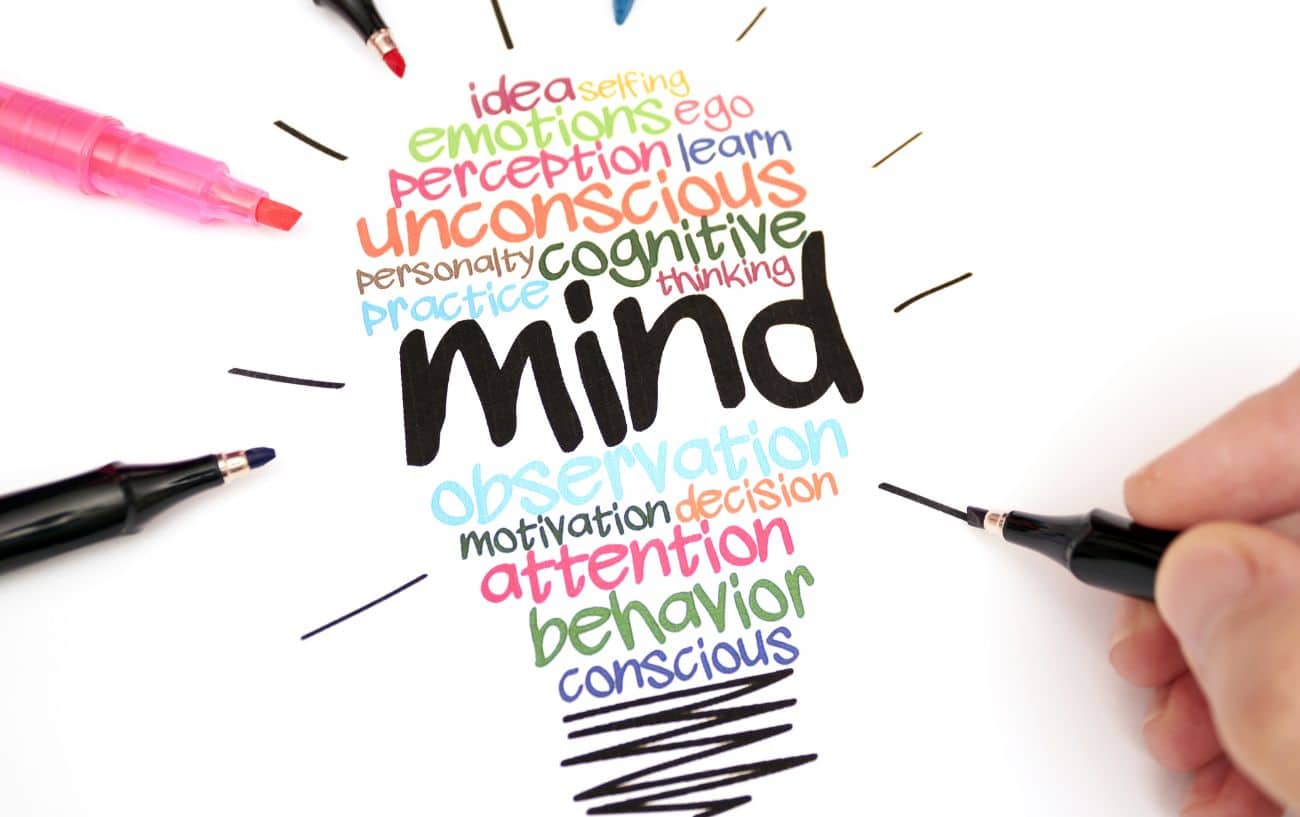
Train Your Body, Train Your Brain
The marathon is an intense physical challenge, but that doesn’t mean the mind is unimportant. Quite the opposite: Your brain controls all your physiologic responses. You need to train it as fully as your quad muscles.
Here are several other helpful articles about mindset and mantras. Both include additional helpful tips.
Remember: Your brain doesn’t just sit atop your corpus to separate your ears. It constantly receives signals and sends out responses. Many of these are autonomic, but you can steer others with your thoughts.
You can make things better or worse according to the way you think about them and the way you have prepared for them. Preparation. That’s the key.
In the marathon, being physically and mentally prepared is the name of the game.
If you need a place to start while searching for your mantra, check out this next guide:
References
RunClub — Free
Join 300,000+ runners in RunClub
Free training plans for every distance, a daily running game, exclusive coaching content, and a real community of runners. Create your free account in 20 seconds — no card.
Already a member? Log in →











Join the conversation
I will plan to use all these tips next Sunday in NY..and channel my inner Amby