


As we get older, fitness drops.
Some of that is biology. But some of it might be the result of a lifetime of underestimating what the body can maintain when it keeps moving.
A new mini-review in the Journal of Applied Physiology1Seals, D. R., DeSouza, C. A., Tanaka, H., Moreau, K. L., Darvish, S., Ambrose, C., & Davy, K. P. (2026). Early women’s health research on endurance exercise training and cardiovascular aging at the University of Colorado Boulder using the masters athlete model. Journal of Applied Physiology, 140(6), 1625–1648. https://doi.org/10.1152/japplphysiol.00142.2026 is a scientific time capsule. Dr. Douglas Seals and colleagues look back at a research program that started at the University of Colorado Boulder in the early 1990s, when women were still wildly underrepresented in exercise physiology and cardiovascular aging research (author’s note: they still are).
Their approach was simple: study female masters endurance athletes, mostly runners, and compare them with healthy but non-exercising women of similar age, as well as younger women. If we want to know what aging does to the cardiovascular system, we should not only study people who stopped training decades ago, but also study women who kept running.
That’s what the team did, and the results are a pretty strong argument that the aging body is far more adaptable than old assumptions suggested. And I think these findings have implications for all runners, regardless of age or gender.
The historical context here is important.
For a long time, male physiology was treated as the default in biomedical research. Women were often excluded because menstrual cycles, pregnancy, hormonal contraceptives, and menopause were viewed as “complicating factors.” This is scientifically lazy and leaves major gaps in our understanding of women’s health.
Exercise science had (has?) the same problem. Women were underrepresented, and older women were even less studied. Meanwhile, there were persistent cultural and medical myths that strenuous exercise was somehow inappropriate or risky for women.
This review is partly about that history. But it’s also about what the researchers found when they actually started measuring. That’s what we’ll talk about today.
Beginning in 1993, the CU Boulder group used what’s called the “masters athlete model.” Instead of running a short intervention where previously sedentary adults exercise for a few months, they studied women who had been training for years or decades. That gives them a different kind of insight. You are not just asking what happens after 12 weeks of exercise in previously untrained people. You are asking what the cardiovascular system looks like after a lifetime of endurance training.
That is incredibly relevant for runners. Most of us are trying to figure out how to keep doing this for decades and what the result of that long-term training might be.
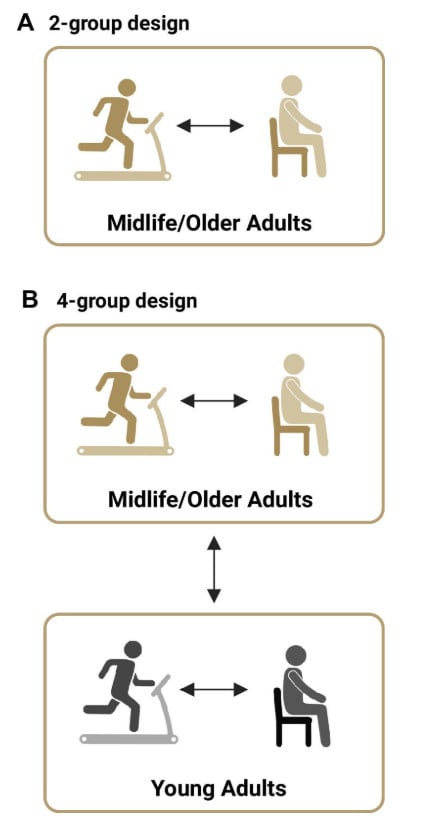
The basic idea of the masters athlete model is to compare older endurance athletes with older non-exercising adults, and sometimes with younger athletes and younger non-exercising adults too. This lets researchers ask two related questions.
- First, do older endurance athletes have better cardiovascular function than older non-exercising adults?
- Second, does endurance training appear to reduce the typical age-related decline in those functions?
The advantage is obvious. Masters athletes represent a real-world model of long-term training. They’ve accumulated years of aerobic work, not just a few months in a lab study.
The limitation is also obvious. These athletes are not randomly assigned to become lifelong athletes. They may differ from nonexercising peers in genetics, diet, body composition, sleep, social support, motivation, injury history, and a dozen other factors. So we should not interpret every difference as purely caused by running.
Still, as an initial probe into what long-term endurance exercise might preserve, this model is incredibly useful. And in women, it was especially useful because so little work had been done.
The Aerobic Fitness Gap Is Bigger Than You’d Expect
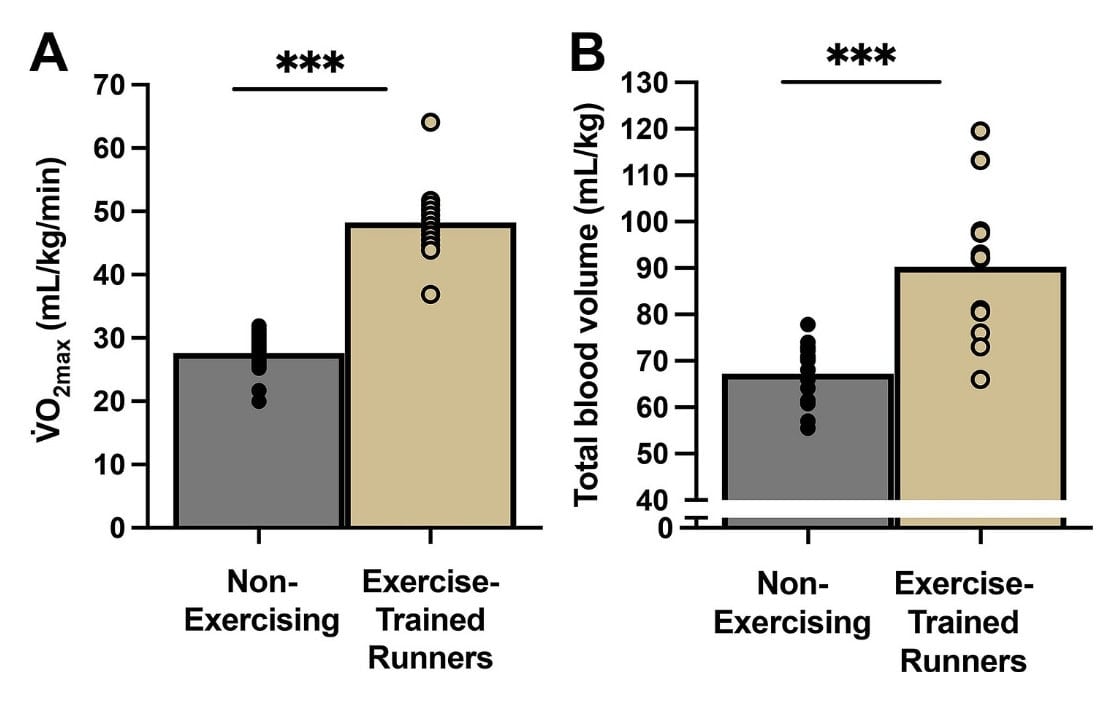
In one early CU Boulder study, researchers compared 13 highly trained, middle-aged and older female distance runners with 17 age-matched, healthy, non-exercising women. The runners were around 55 years old, had been training for about 18 years, ran an average of roughly 31 miles per week, and performed at least an hour of high-intensity exercise daily.
Their VO2 max was 83% higher than that of the non-exercising women: about 48.6 versus 26.5 mL/kg/min.
The runners also had about 40% greater total blood volume relative to body weight, including greater plasma and red blood cell volume. That matters because blood volume is a major contributor to endurance performance. More blood volume can support higher stroke volume, oxygen delivery, thermoregulation, and overall cardiovascular capacity.
But VO2 max still declined…. in everyone.
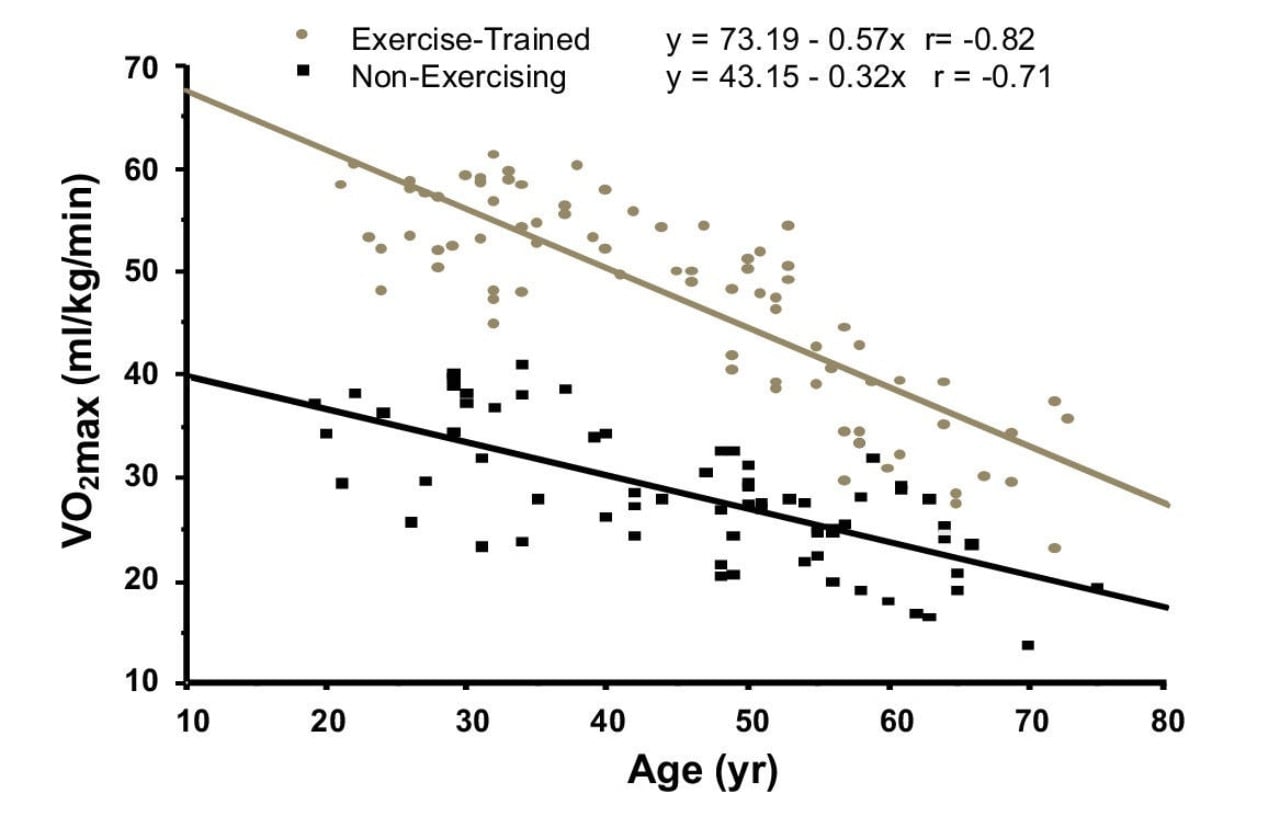
Female masters runners had much higher VO2 max than non-exercising women at any given age. But they still experienced declines as they aged.
In fact, when researchers examined the absolute decline in VO2 max, endurance-trained women sometimes showed a larger decline per decade than sedentary women. That sounds bad until you remember that baseline status matters. If you start higher, you often have more room to fall.
When the decline was expressed as a percentage, trained and untrained women lost VO2 max at a similar relative rate, roughly around 9–11% per decade.
Running does not make you immune to aging. Even highly trained women lose aerobic capacity over time.
The encouraging part is that, because trained women start from a much higher level, they remain far fitter than their inactive peers for decades. A runner can lose fitness with age and still maintain an aerobic capacity that is dramatically higher than that of someone who never built the base in the first place. You can see that clearly from the figure below.
One longitudinal study followed eight female masters runners and sixteen non-exercising women for about seven years.
VO2 max declined in both groups, and the absolute decline was about twice as large in the runners. But among runners who maintained their training volume, the decline was much smaller than among those who reduced their training.
That is the runner’s version of “use it or lose it.” Or maybe more accurately: build it, use it, and keep using it.
How Running Changes the Way Your Body Ages
In non-exercising women, aging and menopause are commonly associated with increases in body mass, total body fat, abdominal fat, and reductions in fat-free mass.
The masters runners showed a very different pattern.
Across several studies, endurance-trained women gained far less body mass and fat mass with age and menopause than non-exercising women. In one four-group comparison, the postmenopausal-to-premenopausal differences in body mass, BMI, body fat percentage, fat mass, waist circumference, and fat-free mass were about 40–80% smaller in runners than in non-exercising women.
That doesn’t mean female runners were completely protected from changes in body composition. Some increase in adiposity still occurred with age and menopause. But the magnitude was much smaller.
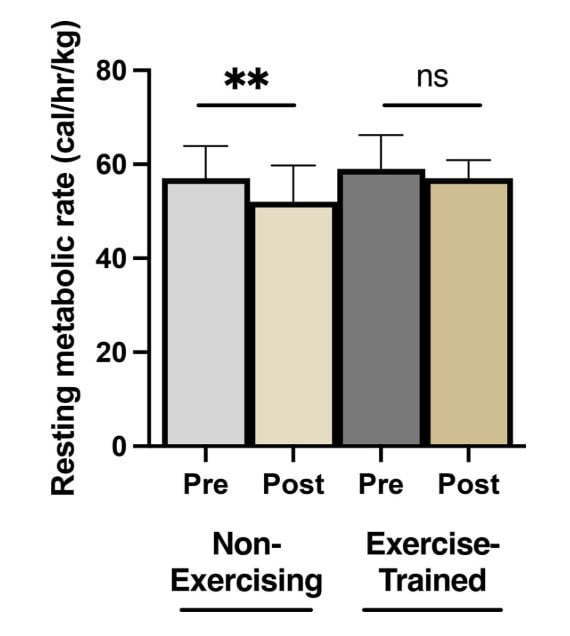
The researchers also looked at resting metabolic rate.
- In non-exercising women, resting metabolic rate was about 10% lower in postmenopausal than in premenopausal women.
- In endurance athletes, that age-related drop was not observed.
The runners appeared to maintain resting energy expenditure better, possibly because they preserved more fat-free mass and had a higher overall “energy flux” due to training and diet.
Lifelong Runners Have Younger Arteries
The cardiovascular findings are probably the most important part of the review, in my opinion.
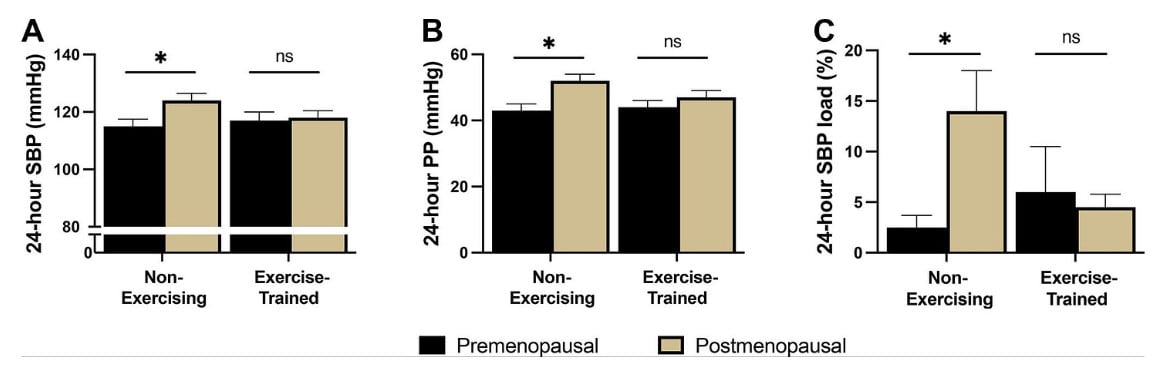
In non-exercising women, systolic blood pressure tends to rise with age and menopause. The same is true for pulse pressure, arterial stiffness, and other vascular risk markers.
The female masters runners looked much healthier on many of these measures. In one study of healthy postmenopausal women, masters runners had systolic blood pressure values about 5–8 mmHg lower than non-exercising controls. They also had lower blood pressure variability and smaller rises in systolic blood pressure during exercise.
In another study using 24-hour ambulatory blood pressure monitoring (which allows researchers to track blood pressure throughout the day rather than at a single time point), non-exercising postmenopausal women had roughly 10 mmHg higher 24-hour systolic blood pressure and pulse pressure than premenopausal non-exercising women. But in the runners, those postmenopausal differences were not significant.
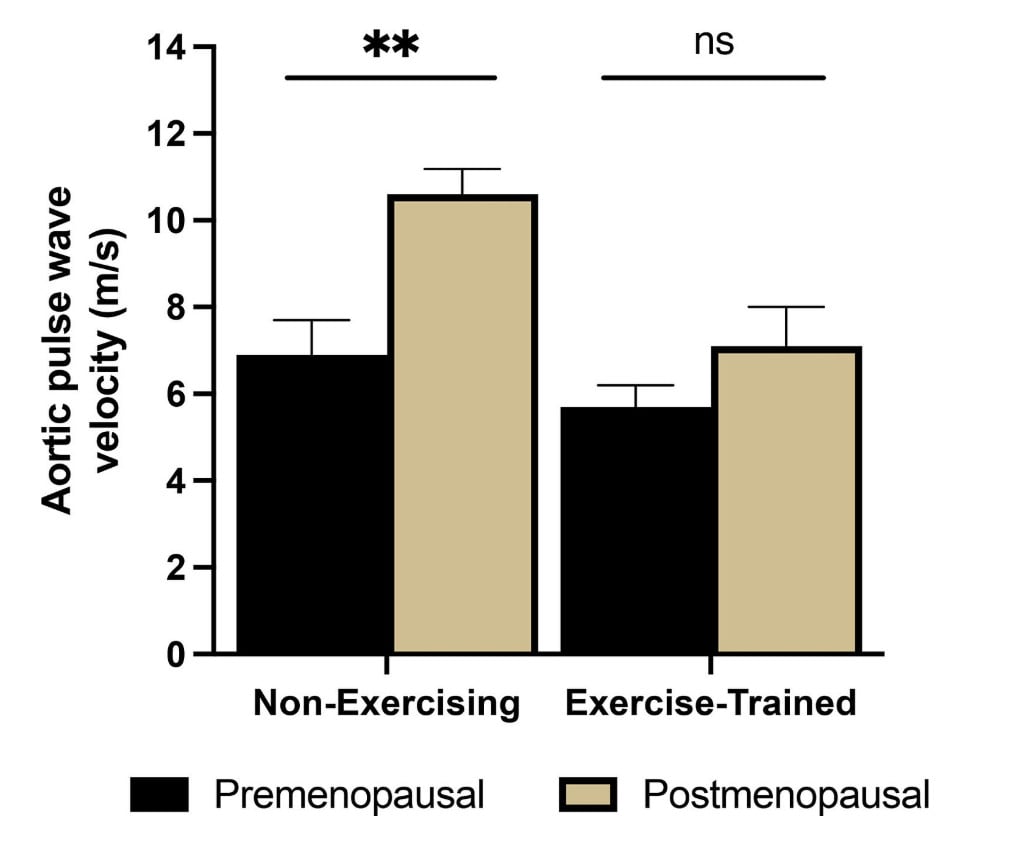
Aortic pulse wave velocity, a marker of central arterial stiffness, was 54% higher (worse) in postmenopausal compared with premenopausal non-exercising women. But among endurance-trained runners, there was no significant age- or menopause-related difference. As a result, the postmenopausal masters runners had much lower artery stiffness than non-exercising postmenopausal women.
If I had to summarize the vascular part of this review in plain terms, I’d say this: lifelong endurance training seems to help keep the “pipes” younger.
The One surprising exception
One of the most interesting findings is that female masters athletes did not outperform their peers.
In men, habitual endurance training is associated with improved vascular endothelial function, the ability of blood vessels to dilate properly. The endothelium is the inner lining of blood vessels, and it plays a major role in vascular health.
So researchers expected to see the same thing in female masters athletes.
They didn’t.
In postmenopausal women who were not using hormone therapy, endothelial function was not better in masters endurance athletes than in healthy non-exercising controls. This was surprising because male masters athletes did show better endothelial function than non-exercising men.
Follow-up work suggested that estrogen may play a role. In one intervention study, endurance exercise training improved endothelial function in postmenopausal women when estrogen supplementation was given before training. Without that hormonal environment, the vascular adaptation seemed blunted.
This is such an important point because it pushes back against a lazy assumption in exercise science: that women will adapt like men, just with smaller numbers. Sometimes they do. Sometimes they don’t. And menopause can significantly change the physiological context.
Better Blood Sugar, Cholesterol, and Heart Rate — Across the Board
Female masters endurance athletes had healthier “blood chemistry,” a little less tilted toward clot formation, and more capable of breaking down clots.
The runners also had greater heart rate variability than non-exercising postmenopausal women. HRV is often overhyped in endurance circles (I’ve voiced my skepticism), but in this context, it’s being used as a marker of cardiac autonomic regulation. Higher HRV generally reflects greater cardiac parasympathetic modulation, which may be associated with improved cardiac electrical stability.
Metabolically, the runners also looked better. Fasting glucose and insulin were about 15–20% lower in masters athletes than in non-exercising postmenopausal women. During an oral glucose tolerance test, the runners had smaller glucose and insulin responses, faster peaks, and quicker returns toward baseline, indicating better overall regulation of their blood glucose.
HDL cholesterol tended to be higher, while LDL cholesterol, triglycerides, and lipid-based atherosclerosis-promoting markers also tended to be better in endurance-trained women.
What this means for runners
Not every woman (or man) needs to become a high-mileage masters athlete to age well.
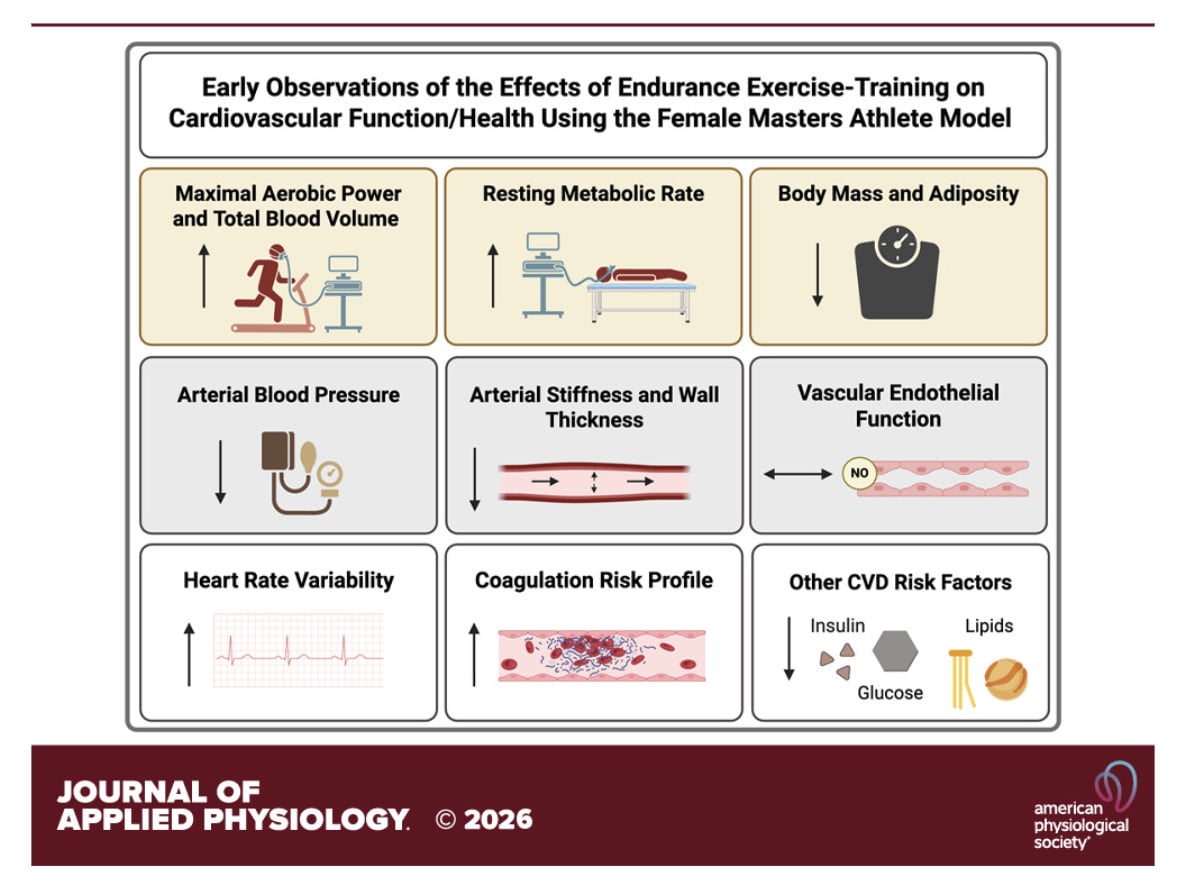
Long-term endurance training can preserve an enormous amount of cardiovascular and metabolic function through midlife, menopause, and older age. The body still changes—VO2 max still declines, and menopause still matters —but the trained body starts from a higher baseline and appears to maintain healthier blood pressure, arterial stiffness, blood volume, body composition, glucose regulation, and lipid profiles.
I’d treat this as a strong argument to keep building aerobic fitness, keep some intensity in your program, maintain enough training volume to support cardiovascular adaptation, and do not assume that the changes often blamed on aging are completely inevitable. They may be common, but this review suggests they are also highly modifiable.
The masters athletes in these studies were not doing a six-week challenge. Many had been training for years or decades. That’s the point. The cardiovascular system adapts to what you repeatedly ask it to do.
For younger runners, this is a reminder to think long-term. The aerobic fitness you build now is part of your physiological reserve later in life.
For midlife and older runners, the message is that whatever you’re doing now is worth continuing. Even if your times are slower and your workouts require more recovery, the act of staying aerobically active appears to preserve systems that matter far beyond race performance.
The obvious limitation is that this was not a randomized trial of lifelong running. You can’t randomly assign women to spend 30 years as endurance athletes or non-exercisers.
So yes, female masters runners may have been different from the start. They may have had favorable genetics, lower body fat, better diets, stronger motivation, better sleep, more social support, or fewer health barriers.
The masters athlete model is powerful, but it is not perfect. Still, I don’t think that weakens the main message. Even if some of the advantages come from selection, the data show what is possible. These women represent a version of aging that looks very different from the inactive norm. They are outliers who show us what can be preserved.
References
RunClub — Free
Join 300,000+ runners in RunClub
Free training plans for every distance, a daily running game, exclusive coaching content, and a real community of runners. Create your free account in 20 seconds — no card.
Already a member? Log in →





Join the conversation
Loved the article. I started running at age 39 in 1979, met my husband, and trained 11 months for the 1980 NYC Marathon. Ran NYC 1980, 1981, 1982...1983 Jersey Shore, and 1984 and 1985 Philadelphia Marathons. Since I have run half marathons, 10-mile races, numerous 10 k\'s, and at age 86, I continue to run 4-5 5k races a year, including Tucson Senior Olympics 5K\'S. (I always win \"The Gold\"....no competition beyond age 79...which is the case for all 5k races I run. I also take zumba classes twice a week, take classes with 5lb weights and straps and dance classes and work out at the gym...push-ups and sit-ups (don\'t like machines). I live in Oro Valley, Arizona and in summer need to run my 3 miles at 6:oo am before the weather gets too hot! I have over 50 1st, 2nd awards for races. I\'ll be 87 in January. My very active and healthy mom died 4 years ago at age 103 --she was my idol! My hope is that I will \"forever\" run and workout!
Which came first? The chicken, or the egg? Did it occur to you that healthy people run because they are healthy, not that they are healthy because they run. Correlation is not causation, as you acknowledge, but you can\'t know which way the gate flows, at least initially to spur activity in the first place. Don\'t take it that I don\'t think running will work to make one healthier, I believe it does, but rather that to get to that point may require other work first. N=1 but in my case, I couldn\'t have run ten feet until I quit eating all of the crap that is in the modern diet and avoid things that mess up my gut (I\'m allergic to casein). Now I\'m training for a 100 miler. I would never have run except that I suddenly had a lot of energy after I quit the artificial sweeteners (diet coke was the last vice I gave up). My point is - telling people to run, and that running will make them healthy, when they are metabolically deranged and wrecked from the modern diet (or something in their diet) is not helpful. They won\'t be able to run and if they try, they won\'t find it pleasurable to attempt to keep it up because their mitochondria and ATP production are impaired. It\'s frustrating for them because one sees some people can eat whatever they want and don\'t have a problem and so they can\'t figure out the source of the problem to fix their health. Everyone is different and what works for one person may not work for someone else. My two cents, worth what you paid for it :)
What a wonderful article. Thank you for the fascinating work you\'ve amassed here and elsewhere. (Big fan!).
A new book has been issued this spring, by Joe Friel, titled \"Faster after 50, revised edition\" (in which I am featured in a little profile called \"Superager\" -- forgive the plug!). Friel\'s book addresses exactly what you are talking about here.
Goooooo, masters running!!!
:)
~Fiona Bayly