


Runners tend to be meticulous about their pre-race and race-day nutrition.
Ask any marathoner how much carbohydrate they take in during a race, and most will confidently tell you: “I fueled perfectly,” giving you an answer down to the exact gram.
The problem is, they’re probably wrong.
A new study from researchers at Dublin City University and Liverpool John Moores University shows just how wide the gap can be between what endurance athletes think they’re consuming and what they actually are consuming.
It’s the first field study to weigh every gel, drink mix, and bar before and after an actual race to measure carbohydrate intake precisely.
What they found was illuminating (and a bit indicting). Both marathoners and cyclists under-consumed carbs on race day, and marathoners, in particular, were the worst offenders.
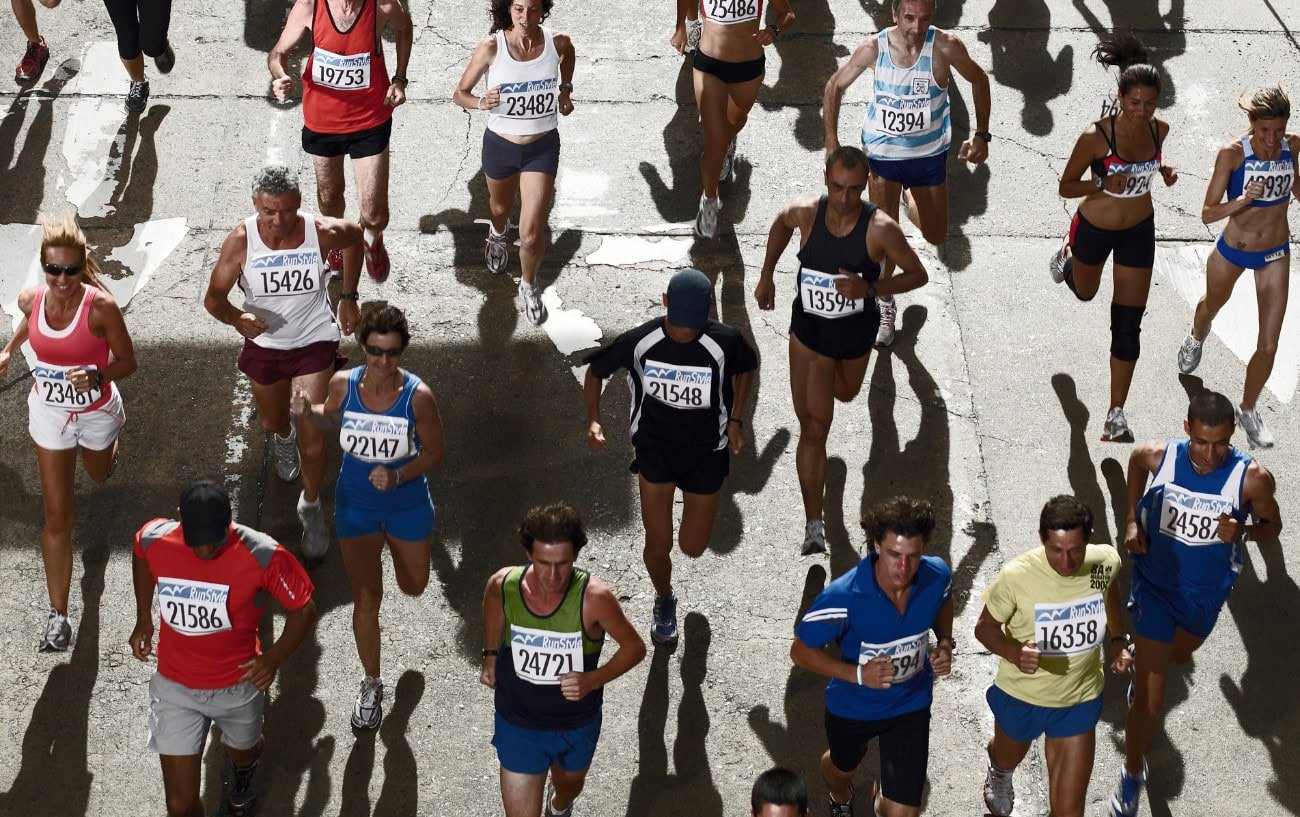
They not only ate less than planned but also overestimated how much they’d consumed. Even more interesting was that their race-day fueling success wasn’t just about knowledge or planning; it was tied to sleep quality and anxiety levels.
The findings are a sobering reminder that carb fueling is not only a physiological act but also a behavioral one. And the marathon, being stressful, logistically complex, and psychologically loaded, is the perfect storm for under-fueling (whether it’s intentional or not).
This one will have you rethinking how you go about planning and executing race-day nutrition.
Researchers recruited 60 trained but non-elite endurance athletes—38 marathoners (average age 45) and 22 cyclists (average age 37). The athletes were competing in two official events in Turkey: the Mersin Marathon and a 101-kilometer Gran Fondo cycling event.
Each athlete provided a few bits of data:
- A race-day fueling plan (what they intended to eat and drink).
- A perceived intake report post-race (what they believed they actually consumed).
- And (most importantly) their actual intake, determined by pre- and post-weighing of every carbohydrate-containing product they consumed (gels, drinks, bars, gummies, etc.) using a lab-grade digital scale.
The precision here is what makes this study stand out. Instead of relying on recall or product counts, the team literally weighed what was left after the finish line. Seems like a tedious effort, but the researchers accomplished this by having each athlete stow their unused products and return them to drop stations along the course and at the finish line.
Participants also completed a sleep questionnaire to assess sleep habits and quality; an anxiety questionnaire to measure race-day anxiety and self-confidence; and a gastrointestinal (GI) symptom rating scale before and after the race to capture GI distress.
All of this allowed the researchers to look not just at fueling quantity, but why some athletes succeeded and others didn’t.
Across the full cohort of marathoners and cyclists, athletes consumed an average of 32 grams of carbohydrate per hour—that’s well below even the lower end of the 60–90 gram per hour recommendation. But the sport-specific breakdown is where it gets fascinating:
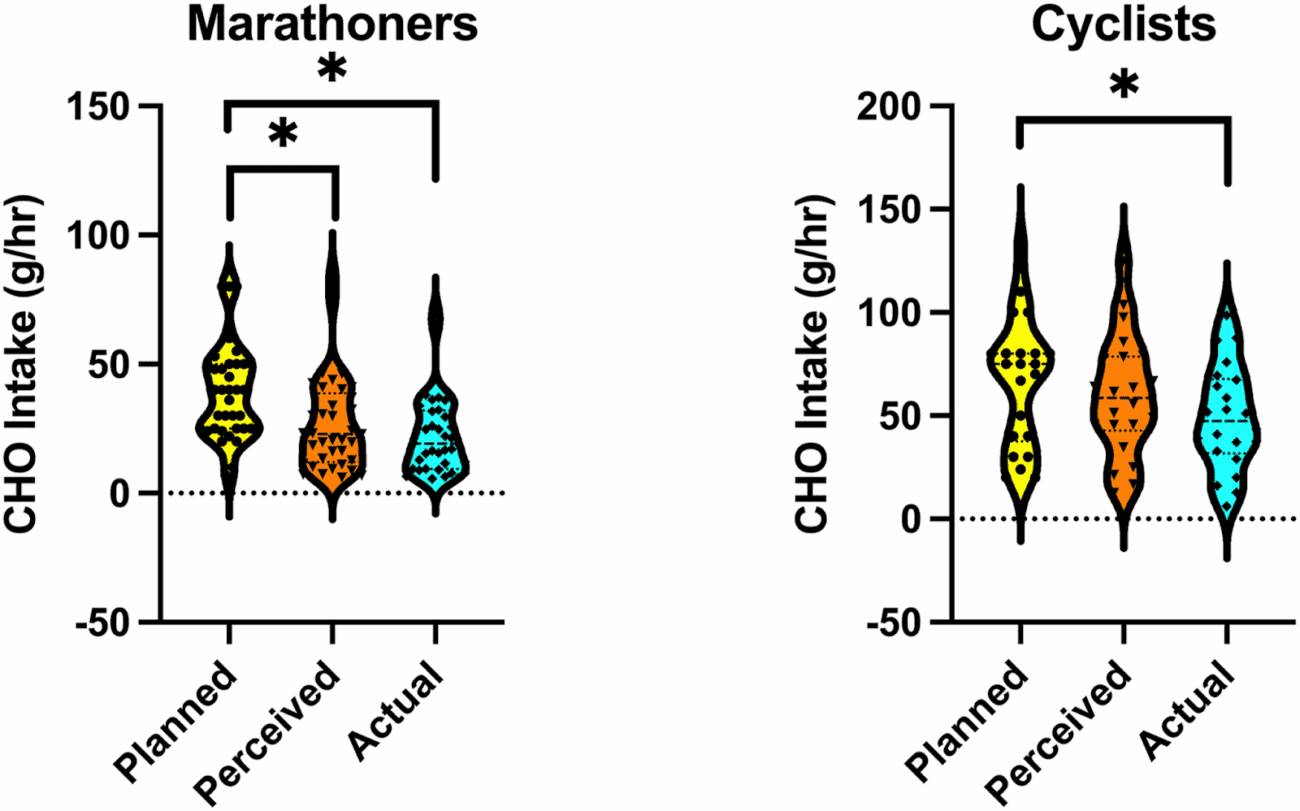
Cyclists consumed more than twice as much carbohydrate as marathoners (50 grams per hour) and were significantly closer to their planned intake of 59 grams per hour. Marathoners’ actual intake of 22 grams per hour also fell short of their planned intake of just 26 grams per hour.
But the more damning finding for runners wasn’t just that they ate less—it’s that they believed they’d eaten more. Marathoners consistently overestimated their intake, while cyclists’ perceived intake matched reality.
How (and what) they fueled
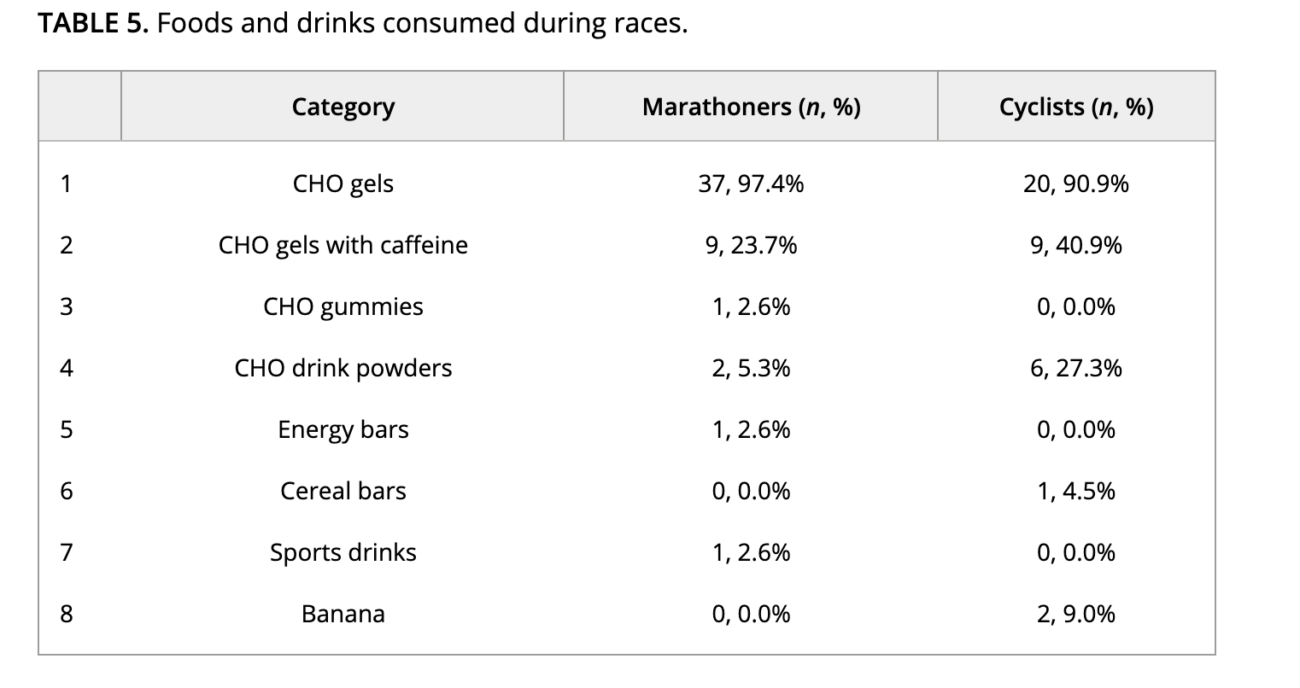
Nearly every athlete relied on carbohydrate gels (97% of marathoners, 91% of cyclists). Cyclists, however, used a more varied mix comprising gels, drink powders, caffeine gels, bars, and even bananas. Marathoners largely stuck to gels alone. This makes sense when you consider the difficulty of consuming anything more than a gel while running. The use of gels likely explains the discrepancy between marathoners’ planned/perceived and actual intakes—gels had the highest leftover rate. They were the most commonly unconsumed product after the race. In contrast, drink powders and gummies were almost always finished.
That’s an important behavioral cue. Gels are easy in theory but harder in practice, especially when the gut starts to rebel or fine motor skills decline late in a marathon. It’s also easy to forget to open one or to take only half during the chaos of an aid station. I’ve noticed several instances where—even when I think I’ve downed my entire gel—there’s inevitably a few drops left in the sachet upon further scrutiny.
Cyclists, by contrast, had bottles on their bikes, allowing more continuous intake. They also had better pre-race carbohydrate loading and higher overall energy intake in the 24 hours leading up to the event (4.95 vs. 3.40 g/kg/day). Only 5.3% of marathoners met the 24-hour carbohydrate target before the race, compared with 0% of cyclists (nobody reached 10–12 g/kg), but cyclists still fared better during the race itself, with half meeting the 60-gram-per-hour minimum.
Behavioral and psychological predictors of carb intake
Perhaps the most novel finding of the study was that fueling success wasn’t just about planning—it was about psychology and sleep.
Three factors predicted higher carbohydrate intake during the race:
- Race type (cyclists > runners)
- Better sleep behavior
- Lower cognitive anxiety
Together, these explained about 41% of the variance in carbohydrate intake.
Athletes who slept better and were less anxious before the race consumed more carbs. Those with poor sleep habits or high anxiety consumed less—even when they’d planned to eat more.
Think about that: the night before your marathon, whether you doom-scroll, toss and turn, or wake up jittery may directly determine how well you fuel the next day!
The mechanisms here make sense. Sleep influences appetite regulation, decision-making, and gut comfort. Anxiety suppresses hunger, slows gastric emptying, and can make gels feel unbearable. The study’s authors point out that marathoners often report more anxiety (mental worry about performance) than cyclists, which likely contributes to this pattern.
Interestingly, GI symptoms didn’t differ between groups and didn’t explain the fueling gap. Only about 10% of runners and 5% of cyclists reported serious symptoms post-race. So while many runners blame “a sensitive stomach” for under-fueling, this study suggests that GI distress wasn’t the main culprit. Instead, the bigger issues were behavioral—pacing, product management, anxiety, and sleep—all of which influenced how much fuel actually goes in.
What this means for runners
Most marathoners aren’t under-fueling because they don’t know what to do. They’re under-fueling because execution on race day is messy. You forget. You feel bloated. You tell yourself you’re fine because you took a gel recently enough. And you probably overestimate how much you’ve actually consumed.
This study quantified that blind spot with real data. Even experienced runners averaged only ~22 grams per hour in this study, less than half of what’s recommended for a 3- to 4-hour race. Overestimation was universal. The first fix is awareness: start tracking what you actually consume in key long runs, not just what you plan to. Weigh or count gels, bottles, or chews before and after a marathon-pace long run to mimic this study’s approach. You might be surprised by how many partial gels or missed intervals add up. This practice also allows you to rehearse race-day fueling. Many marathoners under-fuel simply because it’s hard to open, swallow, and digest gels late in a race. Make the process as “automatic” as possible.
Second, treat sleep and race-day anxiety as part of your fueling plan. A poor night’s sleep can dull appetite and impair focus, both of which affect fueling. Prioritize sleep hygiene in the 3–4 nights before your race—avoid late caffeine, reduce screen time, and keep a consistent bedtime. While we can’t (and shouldn’t) eliminate pre-race nerves completely, finding ways to regulate them is key.
Third, diversify your fueling strategy if possible. Gels are convenient but prone to leftover rates. Mix in drink mixes or chews to improve intake consistency.
Last but not least, rethink the narrative that you fueled fine. As this study clearly shows, perceived intake doesn’t predict actual intake, and even small deficits can accumulate silently to sabotage even the most well-thought-out race plan.
The simplest way to improve performance could be something as unsexy as going to bed earlier or making sure to count your gels.
RunClub — Free
Join 300,000+ runners in RunClub
Free training plans for every distance, a daily running game, exclusive coaching content, and a real community of runners. Create your free account in 20 seconds — no card.
Already a member? Log in →







Join the conversation
Thank you for this interesting article! I\'m running Grandma\'s on June 20 and my training did not meet my hopes. Without good training, I am relying on preparation including sleep and carb loading. I wish there was a magic way to get rid of pre-race nerves. I\'m a wreck on marathon morning!