


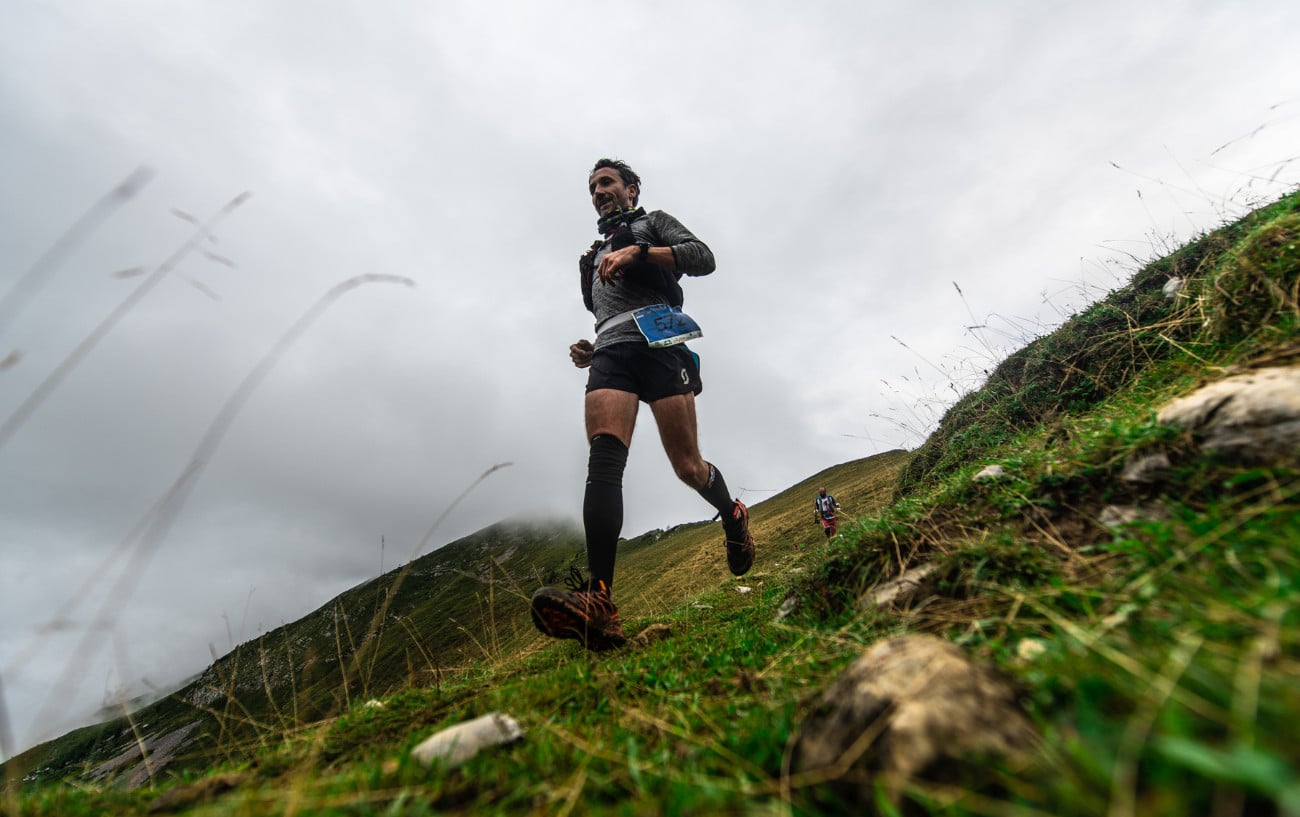
As runners, we throw around the phrase, “I’m overtrained,” constantly.
But if you zoom out for a second, nobody in exercise science or performance really knows how to define overtraining in a clean, diagnostic way. And we don’t have reliable biomarkers that can tell you, with confidence, when you’ve crossed the line.
Sure, we can feel fatigued, chronically sore, flat, irritable, and unmotivated. Performance stagnation (or regression) is one of the more accepted warning signs. But ask two coaches what overtraining is, and you’ll get two different answers.
Part of the problem is that we don’t have a great experimental model for how to truly “overtrain” people on purpose. What’s the minimum dose of hard training that reliably pushes someone into the danger zone? And is it even about training volume, or is it really about inadequate recovery—sleep, calories, stress, and the inability to replenish what you’re burning through?
Without a way to apply the right stress in a controlled setting, it’s nearly impossible to define the signature of an overtrained athlete.

That’s what makes this new study so interesting.1Robberechts, R., Stalmans, M., Lauriks, W., Pelgrim, K., Jansen, P., & Poffé, C. (2026). The metabolic signature of excessive endurance exercise—A prospective study in Tour de France cyclists. IScience, 29(2), 114838. https://doi.org/10.1016/j.isci.2026.114838 Instead of trying to manufacture overtraining in a lab, the researchers used what is arguably one of the most demanding endurance stress tests in the world: the Tour de France. And while it’s cycling—not running—the physiology is exactly the kind of prolonged, high-load, low-recovery scenario we’re trying to understand when we talk about “doing too much.”
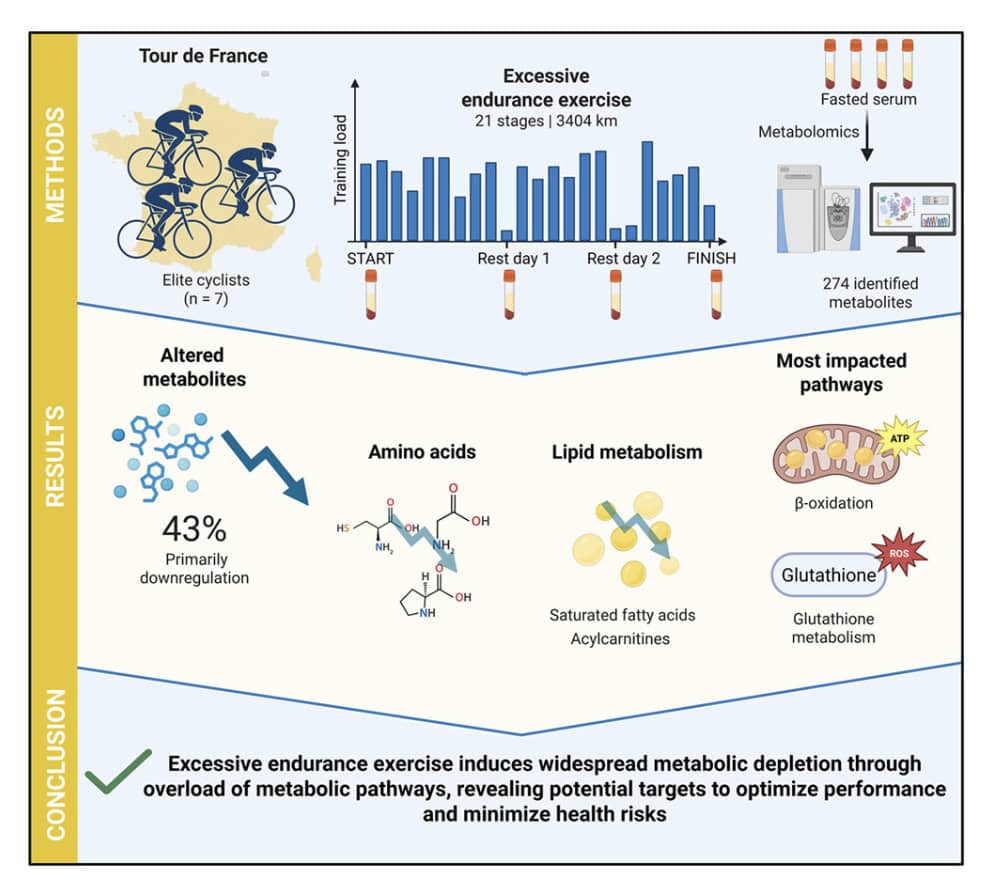
Cyclists in the Tour operate at (or above) the upper limits of sustained human energy expenditure—burning roughly 4–5 times their basal metabolic rate (often 8,000–10,000 calories per day) for three weeks. The 2023 Tour covered 3,404 kilometers with more than 56,000 meters of climbing across 19 stages, plus two rest days. If you want a model of “extreme training load + diminished recovery,” this is it.
The researchers followed seven professional male cyclists during the 2023 Tour (one rider crashed and was excluded), collecting fasting blood samples at four time points: pre-race, rest day 1 (day 10), rest day 2 (day 17), and post-race.
They focused on blood metabolites—small molecules that reflect the body’s activity moment to moment. Think of metabolites as chemical fingerprints of your current state: what fuels you’re using, what you’re running low on, what pathways are under strain. It includes fuel molecules (glucose, fatty acids, ketones), amino acids, byproducts of energy production (lactate), and markers tied to inflammation and oxidative stress. Measuring a broad metabolite panel is essentially a high-resolution snapshot of energy production, fuel availability, and recovery stress.
The Tour causes a broad “emptying out” of metabolites
Across the race, 118 metabolites (43% of those measured) changed, and the dominant direction was down. Far more metabolites decreased than increased from the start to the finish, with the biggest shift happening early, from the start to the first rest day. The first 7–10 days looked like a metabolic gut punch, with utilization outpacing replenishment.
Two pathways stood out: fat oxidation and glutathione metabolism (your main antioxidant system).
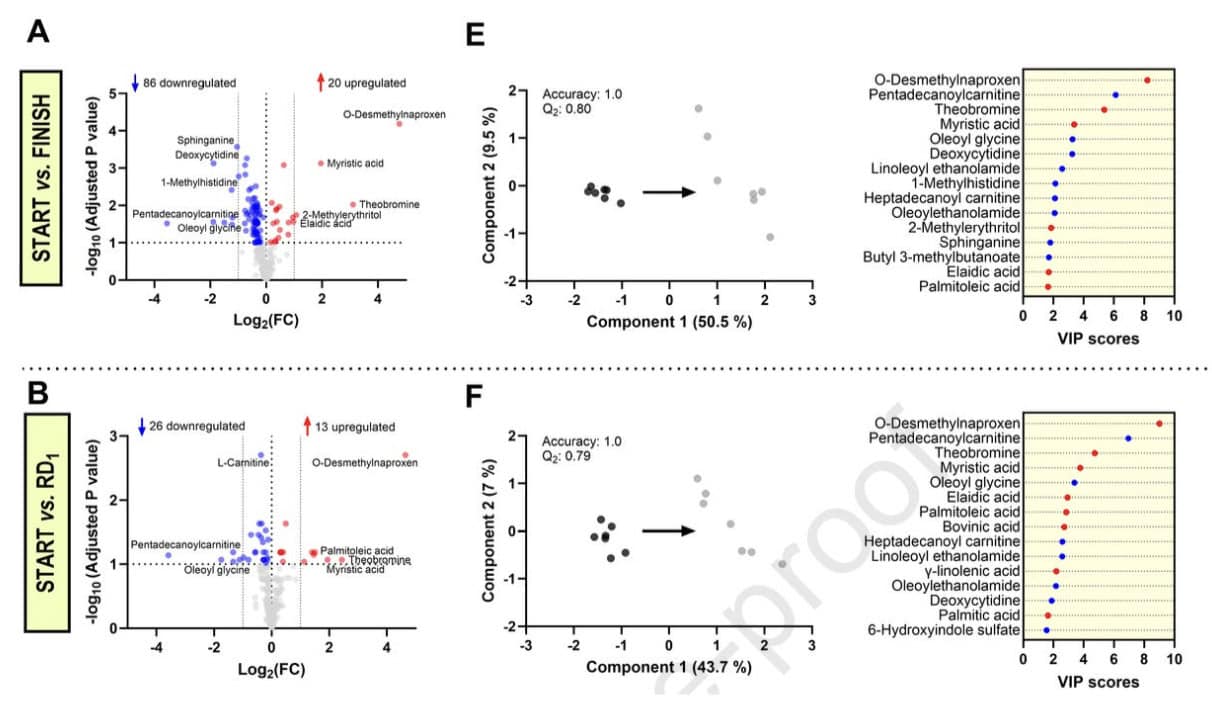
A large part of the signature involved fatty acid metabolism—especially carnitine and acylcarnitines, which help shuttle fatty acids into mitochondria for energy production. Free L-carnitine and several medium- and long-chain acylcarnitines dropped, while intermediates of the Krebs (TCA) cycle increased over time, consistent with massive reliance on aerobic metabolism.
Normally, lower acylcarnitines might suggest reduced fat oxidation. But the authors argue the pattern doesn’t look like a fat-burning shutdown. Instead, it looks like selective adaptations in transport and utilization—possibly increased tissue carnitine uptake to keep fatty acid transport humming under extreme demand.
One of the more intriguing details: saturated fatty acids were selectively depleted, while unsaturated fats weren’t. That’s the opposite of what you often see in “normal” exercise metabolism, where unsaturated fats are preferentially burned. Their proposed explanation is metabolic efficiency: saturated fats require fewer steps to oxidize than unsaturated fats of the same chain length—making them a “cheaper” fuel when the system is maxed out.
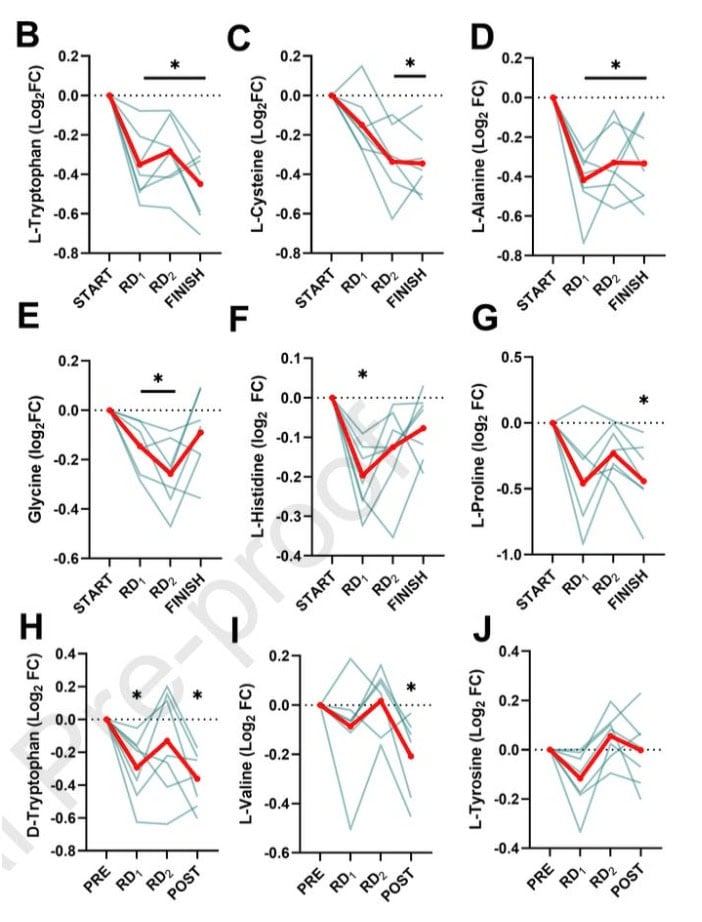
On the antioxidant side, cysteine was the most depleted semi-essential amino acid, falling continuously across all cyclists. This matters because cysteine is rate-limiting for glutathione synthesis, and glutathione is the primary intracellular antioxidant that buffers reactive oxygen species (ROS). The simplest interpretation is that the oxidative stress of three weeks of racing drove glutathione demand so high that the system couldn’t keep up, and cysteine got drained as the body tried to replenish antioxidant capacity.
The authors even point toward a practical angle for endurance athletes. N-acetylcysteine (NAC) has been shown to support glutathione levels and can improve endurance performance during fatigue, suggesting a plausible intervention or supplement strategy.
What shows up as “overtraining biomarkers?”
One of the most useful parts of the paper is that they didn’t just measure metabolites—they asked whether any of them tracked with how destroyed the athletes felt.
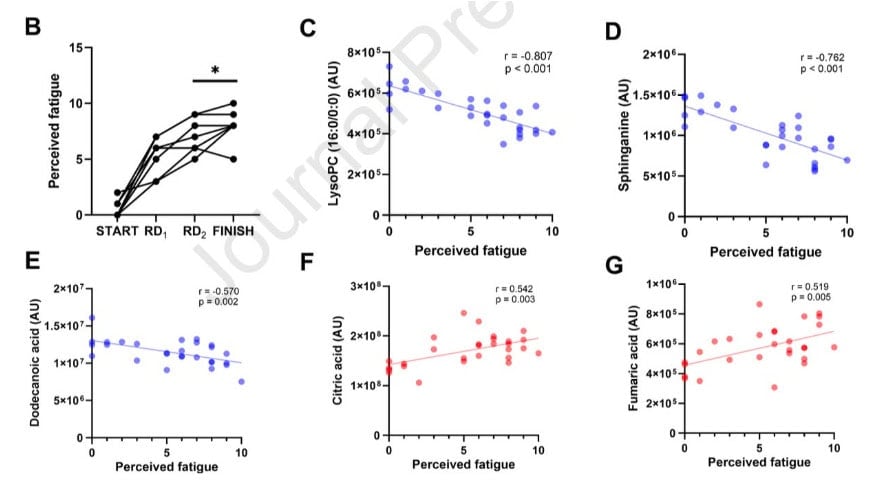
Cyclists rated perceived fatigue on a 0–10 scale at each blood draw: 0.5 at the start, 5 by the first rest day, and 8 by the finish. Then the researchers correlated fatigue with every metabolite. They found 84 metabolite–fatigue correlations, and 77 were negative (fatigue up, metabolite down). These spanned lipids, fatty acids, and amino acids, and importantly, many haven’t been previously linked to fatigue/overreaching, which is why the authors frame them as “novel” biomarker candidates.
The strongest negative correlations were between LysoPC and sphinganine—both related to cell membrane metabolism—prompting the authors to suggest that cell membrane dynamics may play a role in fatigue development (a very zoomed-out way of saying: prolonged stress might not just drain fuel; it may also alter how cells maintain and repair themselves).
Only seven metabolites were positively correlated with fatigue, including citrate and fumarate—consistent with increasing activity of the body’s energy-producing pathways known as the Krebs/TCA cycle alongside rising perceived fatigue. In other words, as the system ramps aerobic throughput to meet demand, athletes feel progressively worse. Not shocking, but the biology lines up neatly with the experience.
Along with being a one-of-a-kind look into a truly extreme training load, this study provides a ranked list of candidates that move in lockstep with perceived fatigue in the real world. Not final answers, but hypotheses to test in larger athlete cohorts—and scenarios where some athletes actually tip into non-functional overreaching or overtraining syndrome.
Was the novel finding that three weeks of hard racing is stressful? No. The novel finding was that stress shows up as a distinct metabolic signature, one dominated by depletion, fat-transport adaptations, and antioxidant strain.
And because most of us aren’t getting a metabolomics panel every time we feel flat (unfortunately), the most interesting implication is that perceived fatigue might be the best field version of all of this. If subjective fatigue correlates with deep biochemical depletion in Tour riders, your simple daily check-in might be more “biomarker-like” than you think, especially when you’re deep in a marathon block and trying to decide whether you’re productively tired or sliding toward a hole.
What this means for runners
If you want to make this actionable, the big theme is that heavy endurance training can create a real “replenishment gap,” where you’re burning through key metabolic and antioxidant resources faster than you restore them, and that gap shows up first as how you feel.
So take subjective fatigue seriously, especially when it rises for days in a row or shows up alongside worsening sleep, irritability, sore legs that don’t rebound, or workouts that inexplicably feel harder at the same pace. The fix is usually boring but effective: more carbs around big sessions, enough total calories during peak weeks, and at least one true easy day per week (easy means easy) so replenishment can catch up to utilization.
If you’re the type who lives on the edge in hard blocks, it’s also reasonable to think about antioxidant support from food first (protein adequacy matters here too, because amino acids are part of the recovery equation), with supplements like NAC, vitamin C, or tart cherry juice potentially helpful but not a substitute for sleep and fueling.
And if you’re looking for the best early-warning system, it’s still the one you already have—your felt sense of effort and fatigue, because it may be tracking the same underlying depletion signature we can measure in Tour de France blood.
References
RunClub — Free
Join 300,000+ runners in RunClub
Free training plans for every distance, a daily running game, exclusive coaching content, and a real community of runners. Create your free account in 20 seconds — no card.
Already a member? Log in →








Start the conversation