


The “inevitable decline” narrative is ever-present for every aging runner. VO₂max falls, thresholds slide backward, recovery gets slower, and at some point, you’re just trying to preserve what you can. Most of that is directionally true (but can be slowed with the right training and lifestyle)
But every once in a while, a data point shows up that makes us question whether we’ve been looking at the curve the right way.
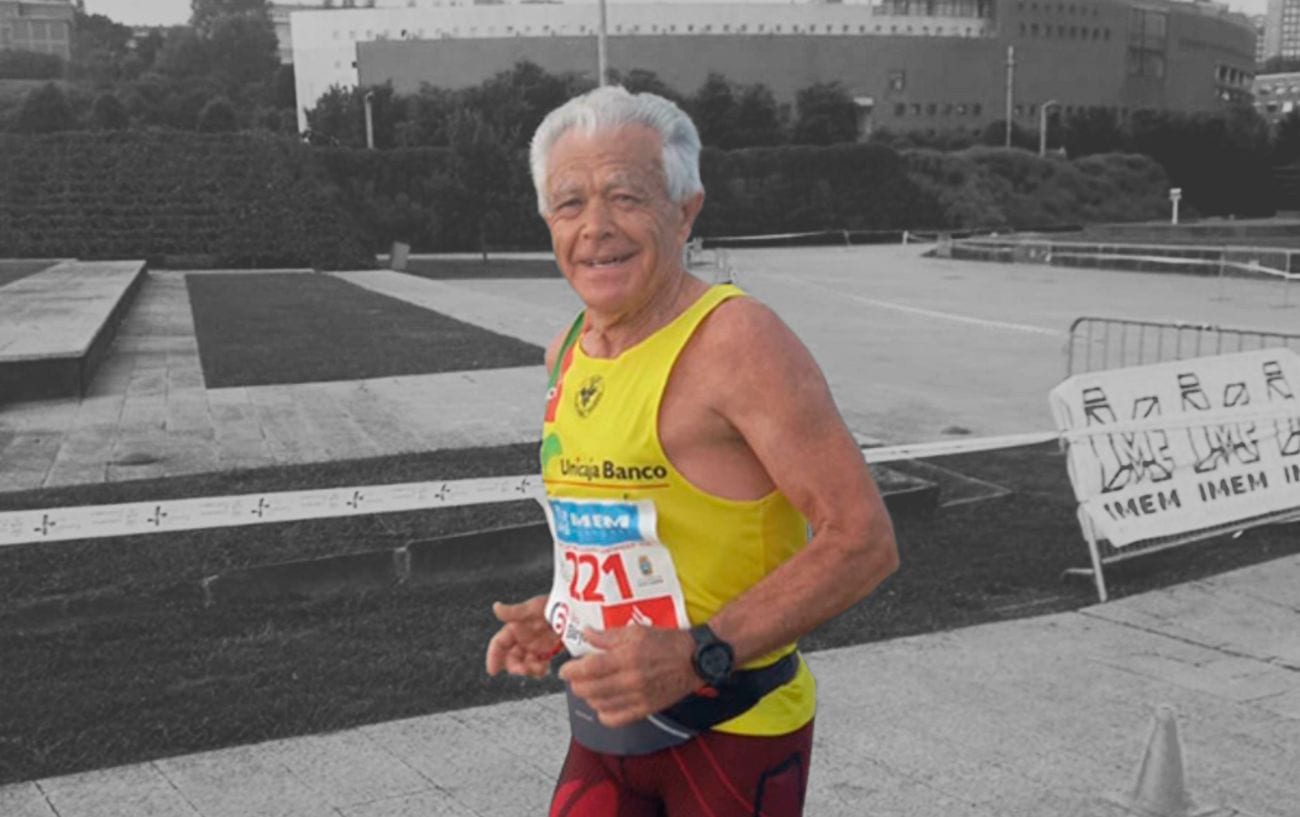
A new paper is one of those data points.1Pilotto, A. M., Higueras-Liébana, E., Ansaldo, M., Baltasar-Fernandez, I., Neri, M., Giusti, L., Buendía-Romero, Á., Valenzuela, P. L., Alcazar, J., Lauretani, F., Re, R., Botter, A., Franchi, M. V., Ara, I., & Porcelli, S. (2026). Exploring the physiological limits of aging: a case study of the male 50-km world record in the 80+ age category. Frontiers in Physiology, 16. https://doi.org/10.3389/fphys.2025.1735019 It’s a deep physiological case study of an 81-year-old Spanish runner who didn’t even start running until age 66, began competing at 70, and then—within about a decade and a half—became the kind of master’s athlete we can all aspire to be.
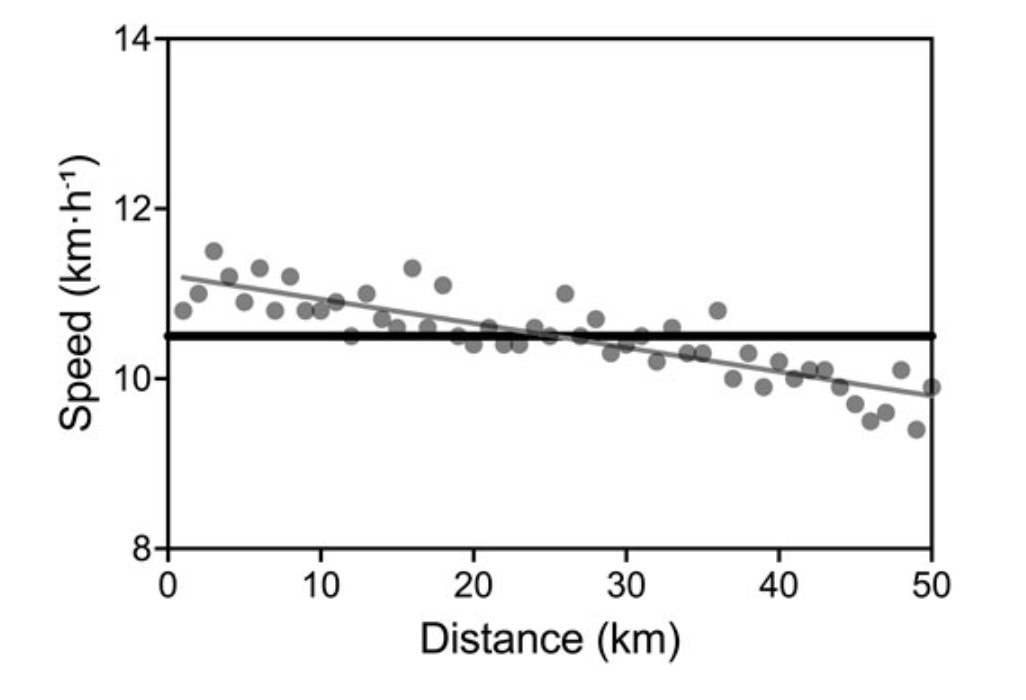
In May 2025, he set the men’s 80+ world record for 50 km in 4:47:39. That’s 5:44 per kilometer (10.5 km/h) for nearly five hours at an age when most people are negotiating a flight of stairs like it’s an ultramarathon. Even more staggering is that he beat the previous world record by 49 minutes.
And the researchers weren’t just interested in the headline performance. They wanted to answer the bigger question: what actually limits endurance performance as we age? Is it the heart? The lungs? The blood? The muscles? The answer with this athlete is both surprising and encouraging.
About two weeks after the world record, the athlete came into the lab for a battery of tests across four visits, separated by at least 48 hours. The design is basically a full systems audit of endurance performance:
- Body composition
- A treadmill graded exercise test to measure VO₂max, peak speed, heart rate responses, and lactate threshold (LT)
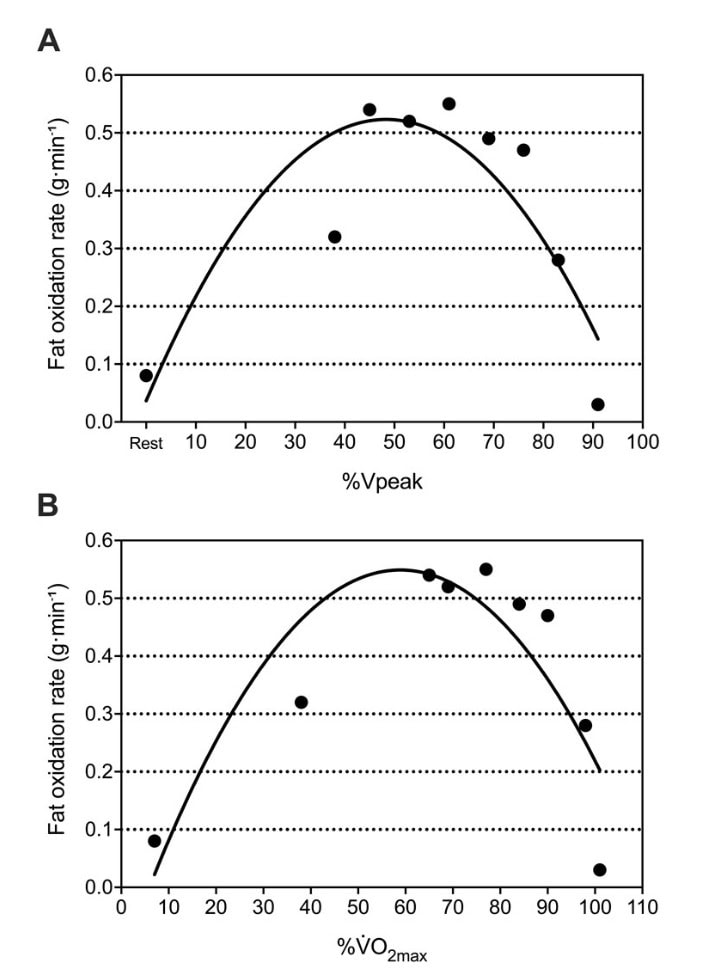
- A submax test to quantify substrate use (fat vs carbohydrate), including maximal fat oxidation (MFO) and the intensity where it occurs (“Fatmax”), plus running economy
- A cycling test paired with cardiac output estimation (for heart function)
- Near-infrared spectroscopy (NIRS) on the vastus lateralis muscle in the leg to estimate muscle oxygen extraction and two key traits: muscle oxidative capacity and a proxy for oxygen diffusion limitations from blood to mitochondria
The whole point of these tests is to map the “oxygen cascade”—the chain that moves oxygen from the air to the lungs to the blood to the muscle to the mitochondria—and to figure out where this athlete is unusually strong (and limited).
Physiological profile
He’s 1.57 m tall (≈5 ft 2 in) and 58.9 kg (≈130 lb), with a BMI around 23.9 and ~19.5% fat mass with a large proportion of lean mass for his size and age. His hemoglobin was high, which matters because hemoglobin is literally the oxygen-carrying capacity of blood—if cardiac output declines with age (it usually does), high hemoglobin can partially compensate by packing more oxygen per liter of blood.
On the treadmill, his VO₂max was 52.8 mL/kg/min, and peak speed (Vpeak) was 13.2 km/h. For an octogenarian, this is in a category of its own; the authors frame it as the highest reported value in someone over 80.
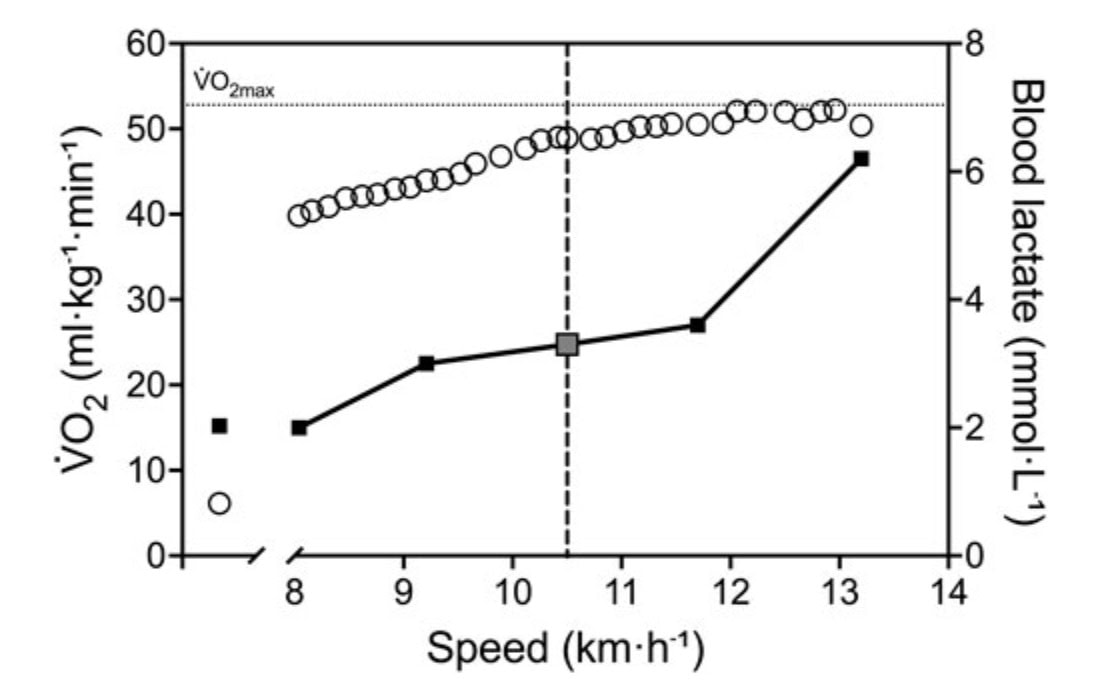
His lactate threshold occurred at 10.5 km/h, which is exactly his average race speed for the world record.
And his threshold intensity was unusually high: at LT, he was at ~91% of VO₂max. In younger, well-trained runners, you might see the threshold in the 75–85% VO₂max range, depending on training history and how you define it.
His maximal fat oxidation (MFO) was 0.55 g/min, comparable to that of much younger athletic populations. But the real flex is where it happens: Fatmax occurred at a high fraction of VO₂max (the paper reports ~77% VO₂max).
His running economy was not exceptional. At 10 km/h, his oxygen cost was 237.5 mL/kg/km, which the authors describe as a relatively low economy compared to elite runners and even compared to other master record holders. They speculate that aging-related changes, such as tendon stiffness, may contribute, and they also note that his volume may be lower than that of some other elite masters.
To figure out where this VO₂max is coming from, they tested him on the bike with cardiac output estimation.
His cycling VO₂peak was 42.6 mL/kg/min (lower than treadmill, as expected), and peak cardiac output was 15.3 L/min with a stroke volume around 98 mL. But the standout trait was oxygen extraction and utilization. They estimated an arterial-venous oxygen difference (which indicates how much oxygen the muscles are taking up and using) of 16.4 mL/dL, translating to ~76.5% oxygen extraction, and NIRS on the vastus lateralis independently supported a similar extraction (~75%). In simple terms, his muscles are pulling a very large percentage of available oxygen out of the blood.
They also estimated that his oxygen diffusion from capillaries to mitochondria is barely limiting; oxygen reaches its target, and the mitochondria are ready to use it immediately.
So the big conclusion is this: his heart is not “young.” His muscles are. Or more precisely, his muscles show the kind of oxygen extraction, diffusion, and mitochondrial capacity that can compensate for the age-related drop in cardiac output.
Training characteristics
This athlete is a decade-plus example of what consistent endurance work can do late in life:
- >3,500 km/year
- Typical weeks around 65 km, rising up to ~120 km/week in the two months before a key race
- 6–7 sessions/week
- General phases: continuous running only, usually 5:00–6:00/km
- Specific phases: adds intervals that progress from 200 m up to 8 km reps, run 5–10 sec/km faster than intended race pace
Frequent running, a lot of steady volume, and then race-specific work that looks very threshold-adjacent (intervals only slightly faster than goal pace) made up most of this runner’s training. That lines up neatly with the physiology—a high LT and strong fat oxidation at relatively high intensities.
What this means for runners
The practical lesson here isn’t to train like a world-record octogenarian. It’s that the adaptations most responsible for sustained endurance—high fractional threshold, strong fat oxidation at moderate-to-hard efforts, and muscle-level oxygen extraction/mitochondrial capacity—appear to be remarkably trainable even when you start late, provided you can stack consistent volume and keep some higher-end work in the plan.
If you’re thinking long-term (years, decades), prioritize frequency and durable weekly mileage you can repeat, make threshold/steady-hard work a cornerstone (because it’s the most direct bridge between VO₂max and real racing), and keep a touch of faster running year-round to preserve range without constantly frying yourself.
This study is a loud argument that the muscle’s ability to use oxygen—and the metabolic flexibility to spare glycogen—may be the real superpower for staying competitive as you age.
This guy is the definition of “Run Long, Run Healthy.”
Thanks for reading.
~Brady~
References
RunClub — Free
Join 300,000+ runners in RunClub
Free training plans for every distance, a daily running game, exclusive coaching content, and a real community of runners. Create your free account in 20 seconds — no card.
Already a member? Log in →









Join the conversation
Your November article about VO2max as we age, together with this case study, suggest a couple of things to us aspiring masters:
Keep going to the gym, and keep on running.
I'm only 70.
Thanks.
One slight fault in all these conclusions is that they do not know what all these figures were before he started training. I suspect he does not either. None the less it is very encouraging to us over 80's . A marathon is far enough for me but for my next one I will follow his training principles.