


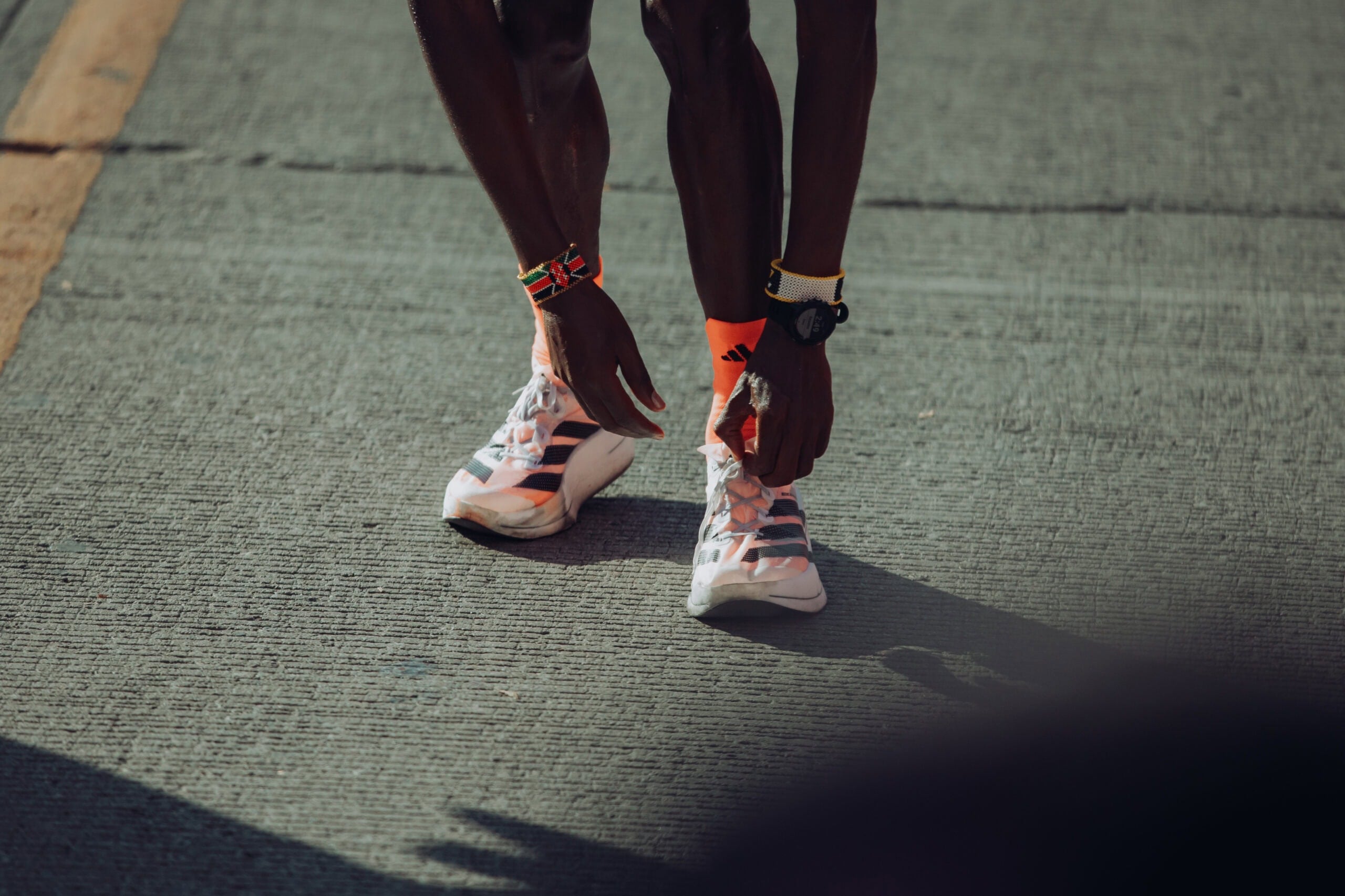
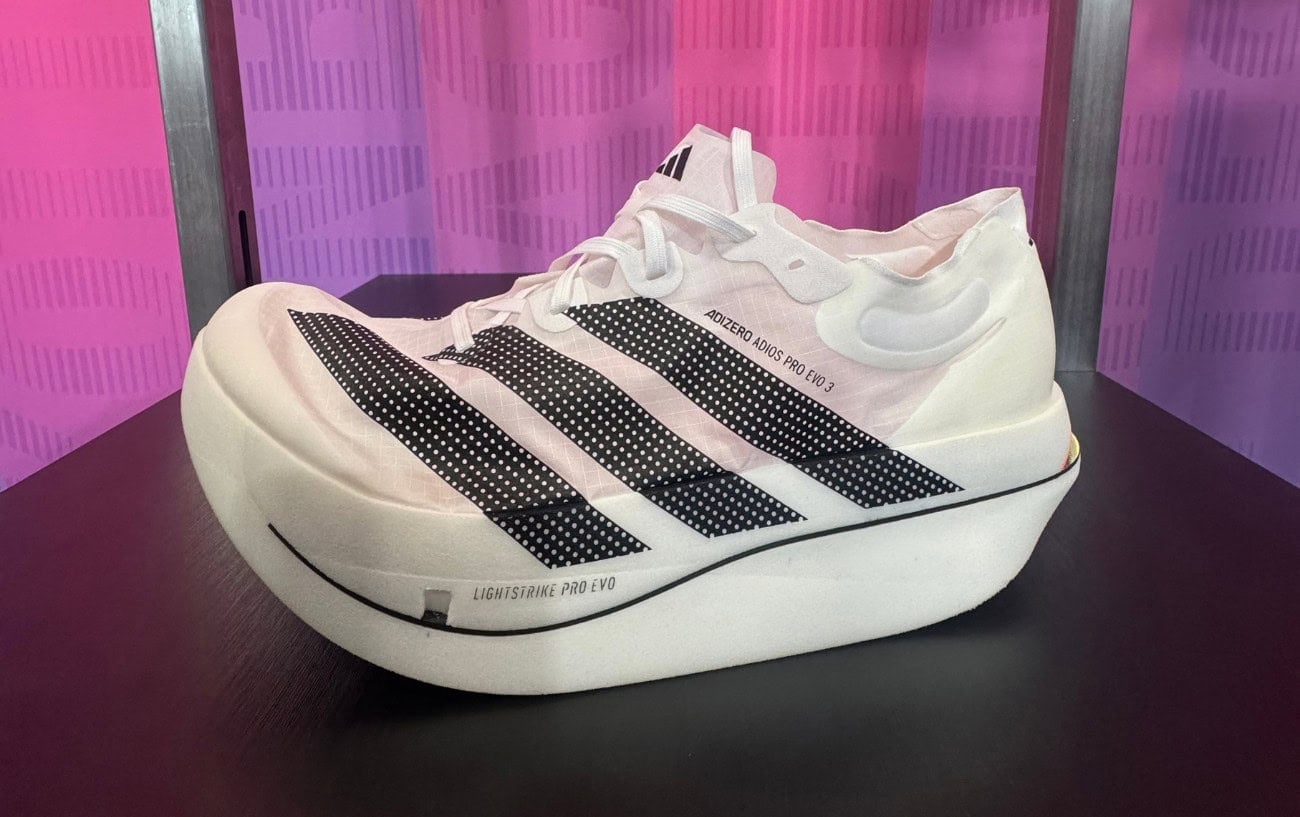
The shoe Yomif Kejelcha held up at the finish of the 21K de Buenos Aires on Sunday has ADIZERO ADIOS PRO EVO 3 printed along the upper and 56:51 WR written across it in marker pen. Almost everyone who has seen the photograph has called it the Pro Evo 3, and almost everyone is right. The name is just less specific than it looks. Three shoes on the World Athletics list of approved footwear carry it, and two of them have never been available to buy.
The retail version, model number KH7678, is the shoe Sabastian Sawe wore for the first sub-two-hour marathon in London in April, and the one Kejelcha wore to run 1:59:41 behind him. World Athletics records it as available for sale from March 24, 2026. The mainstream drop came at London Marathon weekend a month later, in quantities small enough that pairs were being flipped for more than $5,000 against a $500 retail price.
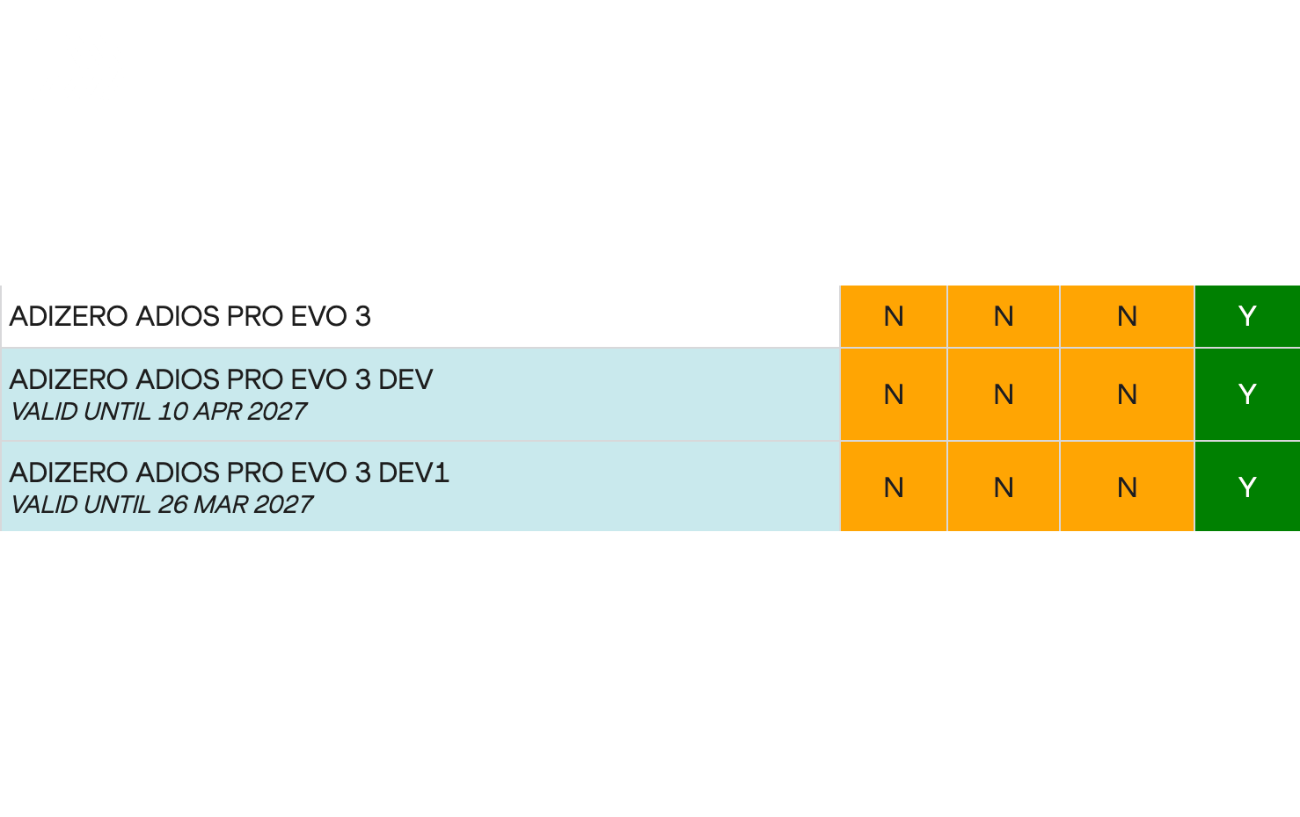
The other two entries are logged as development shoes. ADIZERO ADIOS PRO EVO 3 DEV, model LFG99, is approved until April 10, 2027. ADIZERO ADIOS PRO EVO 3 DEV1, model LC2393, is approved until March 26, 2027. All three are cleared for road racing only.

What a Development Shoe Is
World Athletics defines one as “an Athletic Shoe which is not intended to and has never been available for purchase and which a Shoe Manufacturer is developing to bring to market.” The manufacturer submits specifications, provides samples on request, and receives written approval. Its sponsored athletes may then race in the shoe for 12 months from the date it is entered on the list, which is what the expiry dates measure.
Run those dates backwards and the order is not what most would assume. DEV1 went on the list on March 26 this year, two days after the retail Evo 3’s recorded sale date. DEV followed on April 10, two weeks before London. The prototypes were registered after the shoe they are named for, not before it.
Development shoes are exempt from the rule that a racing shoe must be available for purchase. They are barred from World Athletics Series events and the Olympic Games and permitted everywhere else the world rankings apply. The list says so on its own front page: shoes marked as development shoes “may only be worn within the specified period, but never at WAS Events or OG.”

Why That Matters for the Record
The 21K de Buenos Aires is neither a World Athletics Series event nor the Olympics. Nothing in the shoe regulations prevents a world record being set in a development shoe, and nothing makes ratification conditional on the shoe being purchasable. Kejelcha’s 56:51, 29 seconds inside the 57:20 Jacob Kiplimo ran in Lisbon in March, is eligible whichever of the three was on his feet.
That sits oddly against the two half-marathon records before it. Kiplimo’s 56:42 from Barcelona was refused in February because a lead car had given him a slipstream. His 57:20 replacement has been waiting for ratification since March.
How Common Development Shoes Are
The category is in wide use. The approved list runs to 966 shoes, of which 85 are development shoes. Asics has 16, Nike and Mizuno 10 each, Xtep five, Puma four and Adidas three. Seven of the 85 share a base name with a retail shoe already on the list, among them Hoka’s Cielo X1 3.0 Dev and Puma’s FAST-R Nitro Elite 3 DEV2.
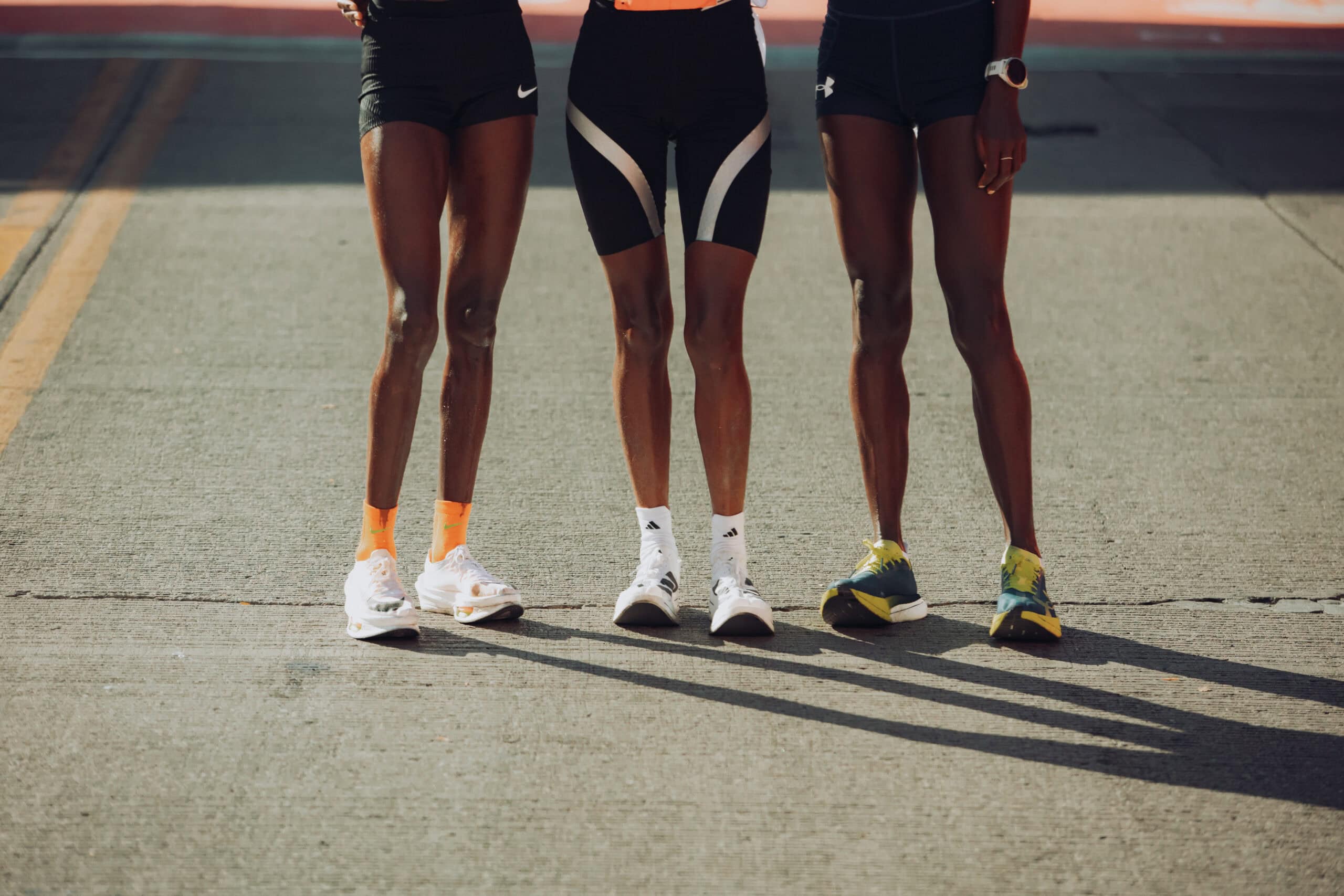
Adidas is the only brand on the list running two development versions of the same model at once. It has also used the convention before: Marathon Handbook reported in April that an Adizero Adios Pro Evo2 DEV had been sitting on the list under model number OQX77 and looked closer to the unreleased Evo 3 than to the Evo 2 then on sale. That entry expired on Aug. 13 and has come off the list, 10 days before Buenos Aires.
The photographs World Athletics publishes settle nothing. The retail record and the DEV record show the same image of a white shoe with black stripes, filed under two different references, and DEV1 shows the other side of a shoe in the same colourway.
One document would settle it. The regulations require a manufacturer to supply World Athletics with “a list containing the date and event of the first and all subsequent competitions” in which a development shoe is worn, and to surrender the shoe after a race if the governing body asks for it. World Athletics knows which races these two shoes have run in. It has not published that list, and neither World Athletics nor Adidas has said which of the three Kejelcha raced in on Sunday.
The wider release of the retail Evo 3 is scheduled to begin at the Berlin Marathon on Sept. 27. Kejelcha’s next race is the Valencia Marathon on Dec. 6.
RunClub
Get more running stories — join RunClub
Daily running news, a community of 300,000+ runners, free training plans for every distance, and a daily running game. Free to join — no card.
Already a member? Log in →





Start the conversation