


Update — 27 April 2026: Since this article was published, Sabastian Sawe became the first man to officially run a marathon under two hours, clocking 1:59:30 at the 2026 London Marathon to break Kelvin Kiptum’s previous men’s world record (2:00:35) by 65 seconds.
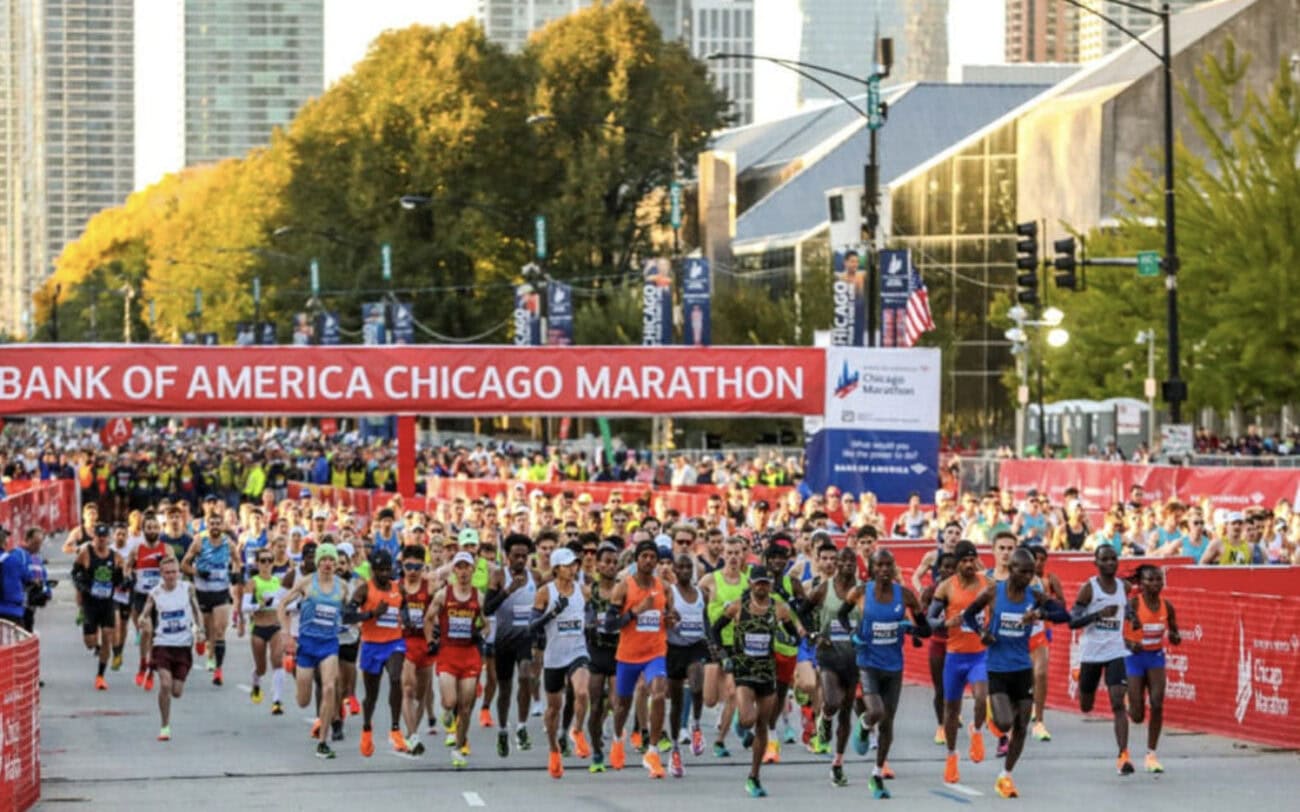
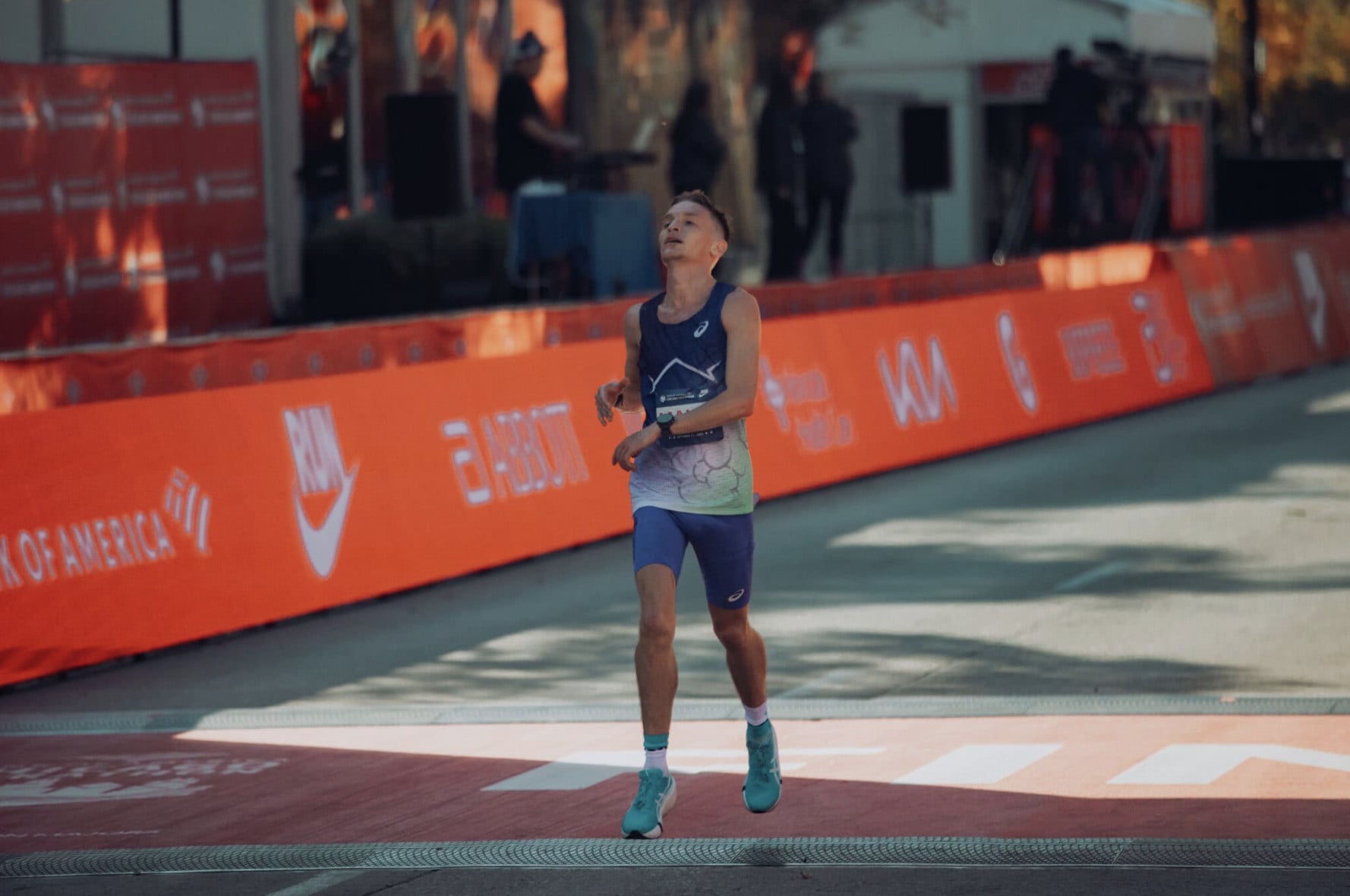
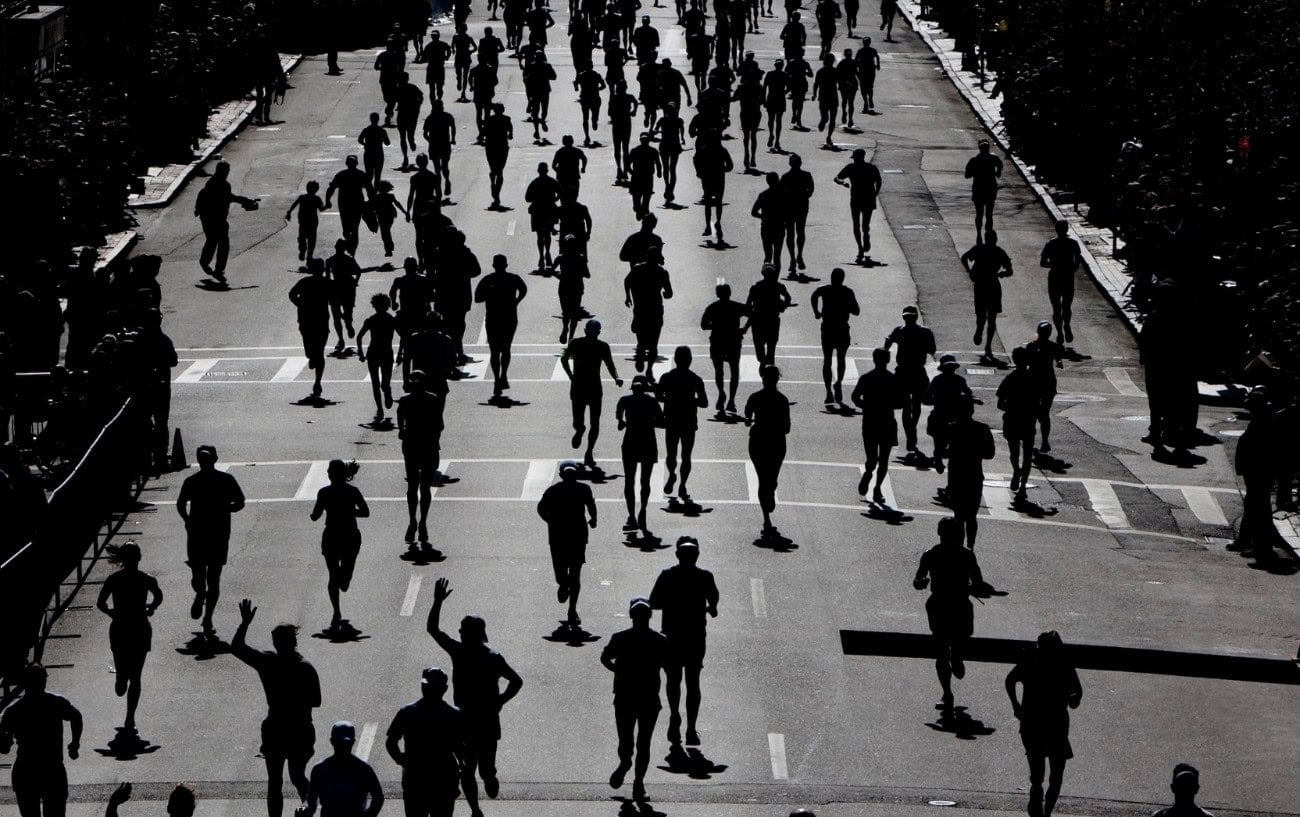
With the Chicago Marathon approaching quickly on Sunday, October 12, talk will soon turn to two big questions: First, will we see a new American men’s record by Conner Mantz? Second, will the men’s world record be rewritten?
In both cases, the answer is a qualified “maybe.” On a good day, with the right weather. Marathon records don’t come easily, after all.
Chicago has a deep, talented women’s field, but this year, it won’t attract as much attention as the men’s races.
On deeper analysis, the men’s record discussions diverge sharply. If achieved, one would garner universal acclaim, while the other could tilt toward been-there, seen-that skepticism.
Mantz is already a widely-admired American marathoner: fast and fearless. He doesn’t shy from record-setting paces and actually prefers running at the front of a pack. As such, he recalls America’s all-time favorite runner: Steve Prefontaine.
After April’s Boston Marathon, where he finished in a personal best of 2:05:08, Mantz said: “At Boston I finished with guys who have run 2:02 and 2:03, so it doesn’t feel like a stretch to say I can run 2:05:30 on a flat course.”
The Boston course is ineligible for official records due to its one-way direction and downhill slant. The Chicago Marathon is flat and follows a looping course, making it a record-eligible event.
It’s Time For A New American Marathon Record
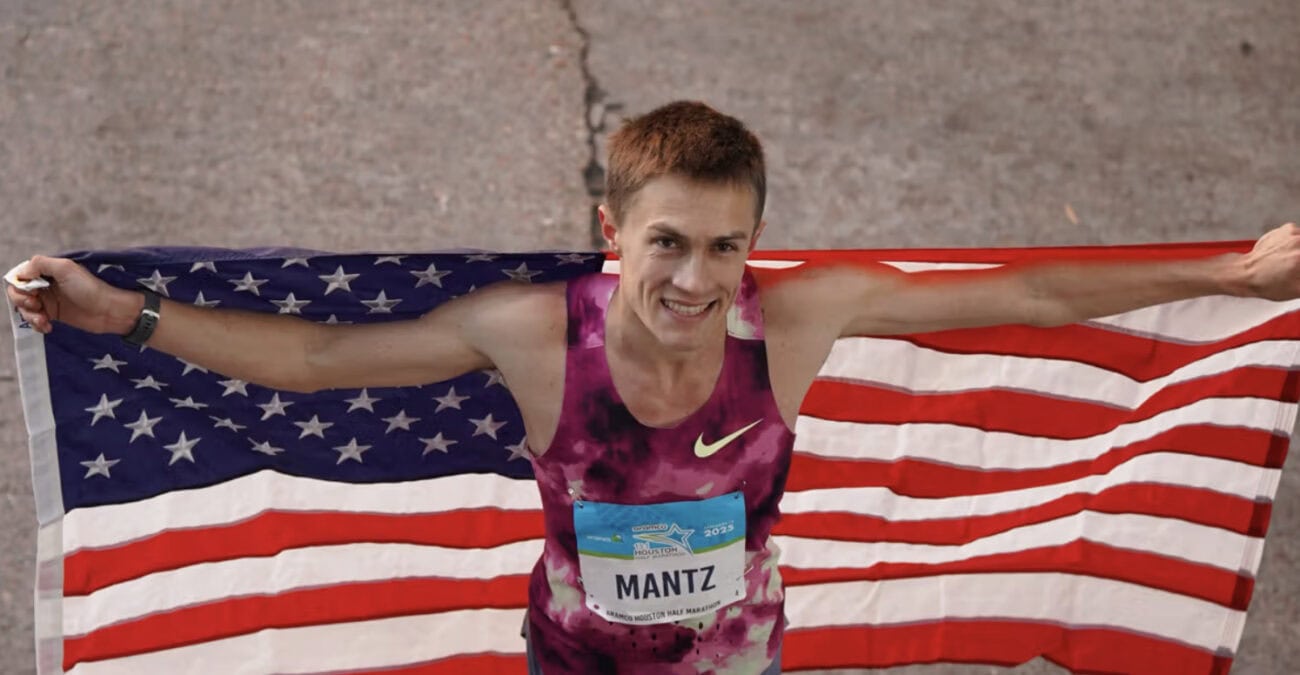
In Chicago, Mantz will be chasing Khalid Khannouchi’s American record time, 2:05:38, set an improbable 23 years ago in London. Mantz ran 2:07:47 two years ago in Chicago.
Moreover, he has set American records in the half-marathon (59:17) and 20K (56:23) this year. The latter came on Labor Day in New Haven, certifying his current fitness. According to the World Athletics Scoring Tables, those performances are roughly equivalent to a 2:05:20 at the marathon distance. Mantz is ready.
The race for a new American record will likely be close, extending all the way to the final miles. This will deliver nail-biting excitement to his attempt. Mantz’s early splits are crucial. Hopefully, fast but not too fast.
We don’t know Mantz’s precise plans for Chicago yet, but the race provides personal pacers for those chasing important records. An American record in the marathon? Yeah, that’s important enough.
A handful of runners could pace Mantz to a 1:02:30 at halfway, but here’s a fun idea. How about track star Grant Fisher, a Nike athlete like Mantz?
Fisher won two bronze medals in last year’s Paris Olympics (5,000 meters and 10,000 meters) and has already displayed his willingness to play the pacesetter. He served in that role for Faith Kipyegon during her sub-4-minute mile effort in Paris this past summer. Nike has been a major sponsor of the Chicago Marathon since 2008.
What Are The Chances For A Men’s World Record?
Okay, that’s the brief on the American record. What about the world record? That’s where some clouds could roll in.
On the one hand, John Korir is a strong favorite. He ran 2:02:44 to win Chicago last October, and backed that up with a Boston Marathon victory last April in 2:04:45. He’s hot, and he’s a proven winner.
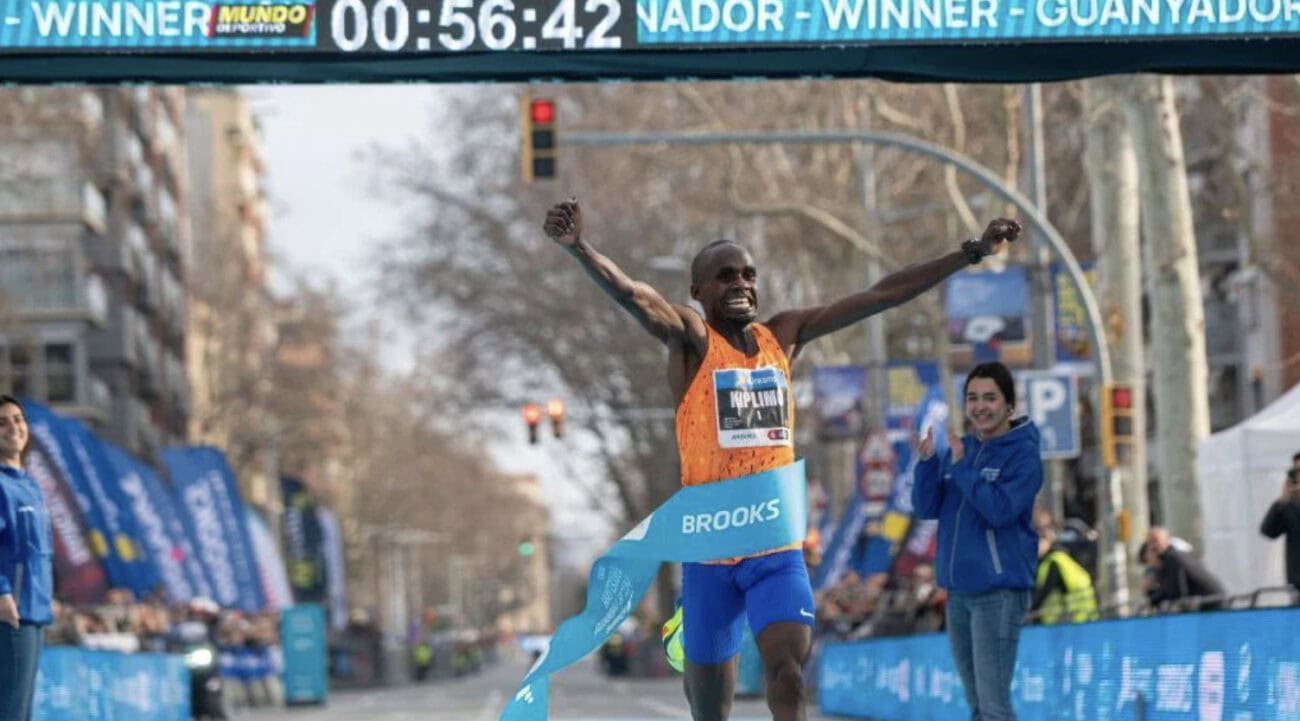
But the men’s field also includes a black swan runner, Ugandan Jacob Kiplimo. Last February, he recorded an off-the-charts performance in the Barcelona half-marathon, winning in 56:42. Statistically, this is the greatest distance race of all time.
According to the World Athletics Scoring Tables, Kiplimo’s Barcelona win is equivalent to a mile time of 3:40.9 and a 5,000-meter time of 12:29.9. Both are considerably faster than the current world records.
Wait, there’s more. Kiplimo’s 56:42 is also equivalent to a 1:59:47 in the marathon. That kind of performance would not only set a world record (the current mark is 2:00:35, achieved by Kelvin Kiptum in Chicago two years ago) but also mark the long-awaited first sub-2-hour marathon in an official, competitive setting. (In 2019, Eliud Kipchoge ran 1:59:40 in an “exhibition” marathon.)
Statistics Can’t Win Races, But ….
Of course, Kiplimo’s “equivalent” times don’t count for anything. In his marathon debut last April in London, he could only manage a second-place 2:03:37.
Still, the second time could prove the charm. And there are several apropos sayings in running. One goes: “You can’t fake a fast race. If you can do it once, you can do it again.” Another: “Talent doesn’t go away.”
By any accounting, Kiplimo is the runner most likely to break the marathon world record in Chicago.
However, he has a credibility problem. Kiplimo is managed by the same team that brought Ruth Chepngetich to Chicago last fall. There, she set an amazing new world record with her 2:09:56.
Five months later, she failed an out-of-competition doping test and withdrew from the 2025 London Marathon. She is currently serving a provisional ban and may never be allowed to race again. What event would want her except for perhaps the Enhanced Games? Her management team has also worked with a number of other elite runners who have failed doping tests.
All Roads Pass Through Buenos Aires
Beyond the shared managers, Kiplimo’s recent racing parallels what Chepngetich did before the Chicago Marathon last year. In August 2024, she tuned up with a half-marathon in Buenos Aires. She won it in 65:58.
Two months later, in Chicago, she covered twice the distance at a faster pace (by one minute per 13.1 miles) than she had maintained in Buenos Aires.
This August, Kiplimo also won in Buenos Aires. On a windy, challenging day, he clocked a 58:29. If he, like Chepnegetich, runs Chicago a minute faster per half-marathon, he’ll finish in about 1:55.
That won’t happen, not on this planet, not in this century. However, based on Kiplimo’s 56:24 half-marathon time, as captured in this video, a sub-2:00 marathon appears within his grasp.
Worth noting: Kiplimo’s half-marathon record has yet to be ratified by World Athletics, which has not commented on the timeline. Some records are approved quickly, some take much longer.
Chepngetich’s 2:09:56 was ratified as a world record in just two months. Records are generally not removed from the books ex post facto, although the Athletes Integrity Unit has the power to do so if it turns up irregularities in a runner’s biological passport.
Another important note: Kiplimo, just 24, has been competing on the world stage since running in the Rio Olympics at the age of 15 in 2016. He has won numerous world titles, including the 2023 World Cross-Country Championships. He also placed second in the 2020/21 Tokyo Olympic 10,000-meter race. He’s a phenom, and he has never failed a doping test.
This Could Be A Marathon For The Ages
Nonetheless, if Kiplimo were to break the marathon world record in Chicago, the post-race press conference would likely be a free-for-all. The Chepngetich parallels raise many provocative questions.
So stay tuned. This year’s Chicago Marathon is one you don’t want to miss. There are several livestream options with commentators, including Ed Eyestone (Mantz’s coach), Carrie Tollefson, Keira D’Amato, and Clayton Young (a frequent Mantz training partner).
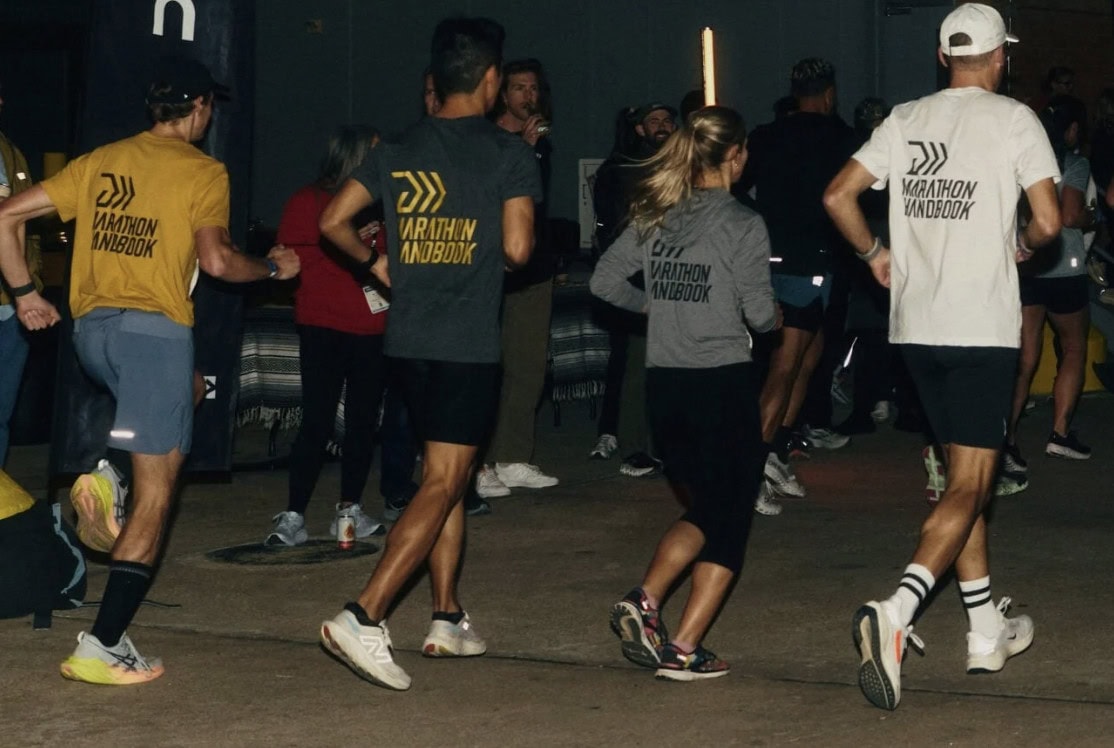
The Marathon Handbook team will also be on the ground with live coverage, a pre-race shakeout run, and plenty of other activities—so stay tuned for all the highlights from one of the most anticipated marathons of the year.
RunClub — Free
Join 300,000+ runners in RunClub
Free training plans for every distance, a daily running game, exclusive coaching content, and a real community of runners. Create your free account in 20 seconds — no card.
Already a member? Log in →









Start the conversation