


Most ultra-endurance studies last hours or days. This one followed a man who ran for 444 days.1Venckunas, T., Chaillou, T., Cesanelli, L., Satkunskiene, D., Rutkauskas, S., Snieckus, A., Minderis, P., Nikitina, D., Skieceviciene, J., Kupcinskas, J., Webersberger, L., Lanner, J. T., Mickevicius, M., Gumauskiene, B., Kuzmickaite, A., Subocius, A., & Kamandulis, S. (2026). Musculoskeletal (Mal)adaptations in Response to a > 30 000-km Running Challenge. In Journal of cachexia, sarcopenia and muscle (Vol. 17, Issue 5, p. e70368). PubMed. https://doi.org/10.1002/jcsm.70368
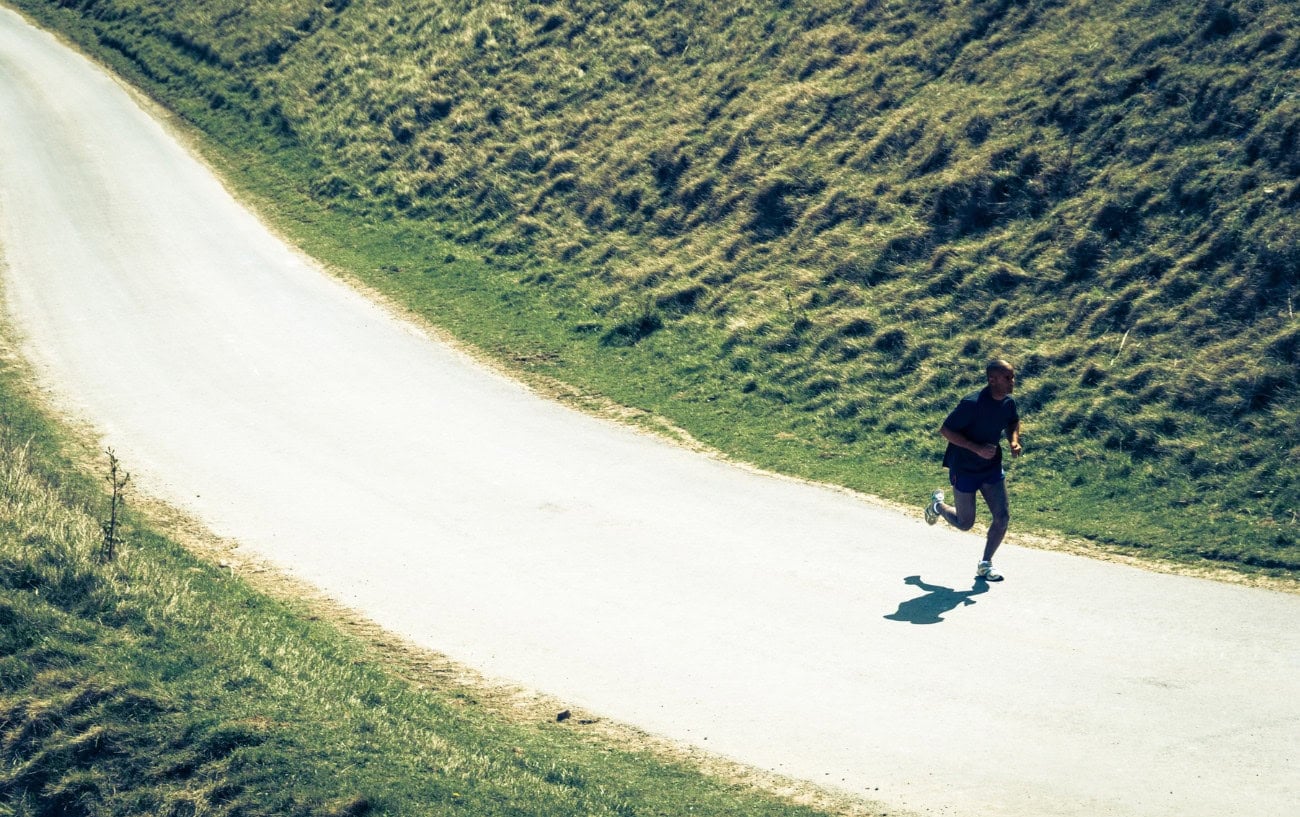
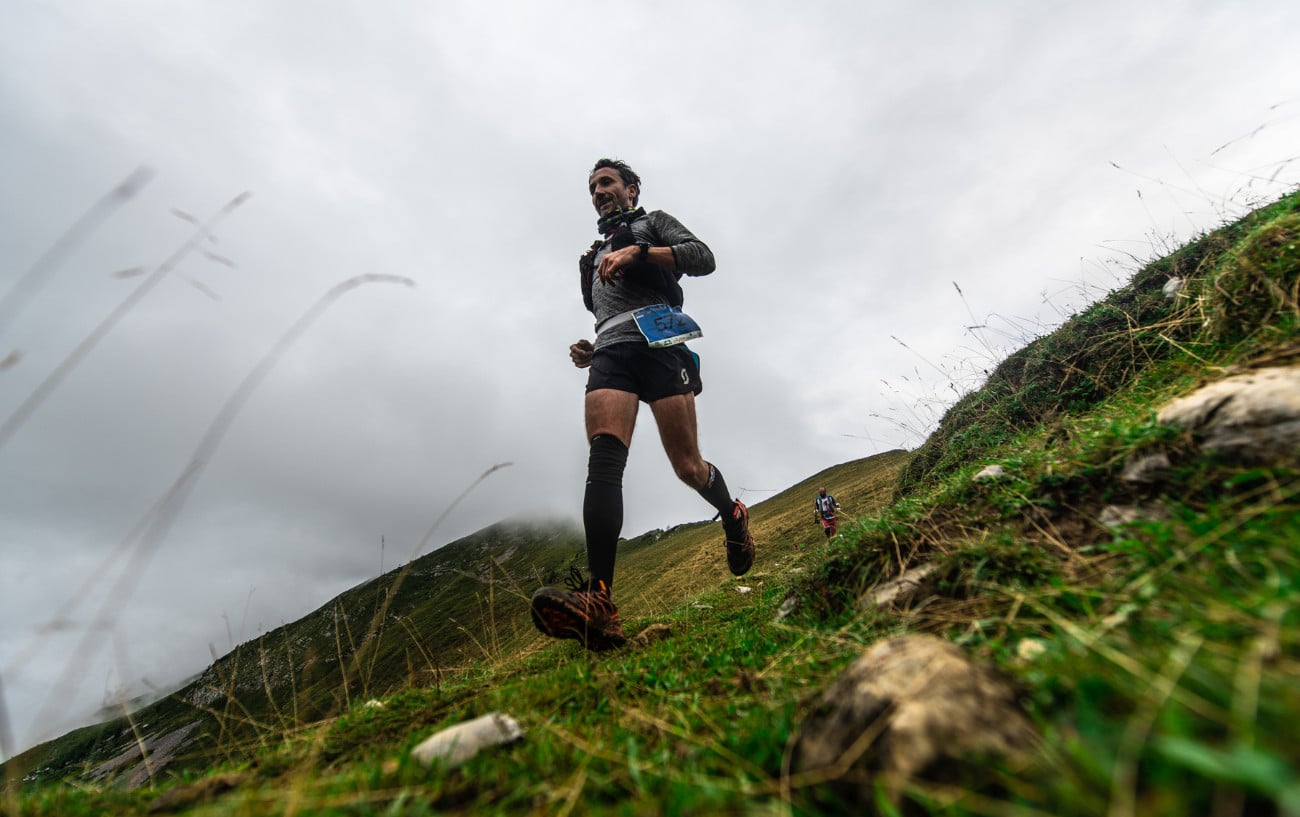
The participant was a highly experienced 49-year-old runner who attempted an extraordinary challenge: 30,303 kilometers (18,830 miles) in roughly 15 months. He averaged 68.3 kilometers (42 miles) per day, took only four days off, and spent about nine hours moving each day at an average speed of 7.7 km/h (4.8 mph). Most of the route was flat asphalt.
Researchers collected blood, body-composition, ultrasound, strength, muscle-biopsy, organ-imaging, and gut-microbiome data before, during, immediately after, and for up to 17 months into recovery.
He finished. His body mass fell by only about three kilograms (six pounds), with most of the loss coming from fat. Hemoglobin, electrolytes, and testosterone remained relatively stable. Imaging found no major cardiac or organ issues, aside from small increases in his left-ventricular diameter and liver size. After the challenge, his body mass rebounded to above his starting weight.
But everything wasn’t so rosy.
He developed painful problems at more than 10 musculoskeletal sites. A tibial stress reaction became painful and swollen midway through the challenge, then eventually resolved even though he continued running. He also experienced bilateral IT-band bursitis, tendinopathy, a partial tendon tear, meniscal abnormalities, and thickening of the plantar fascia.
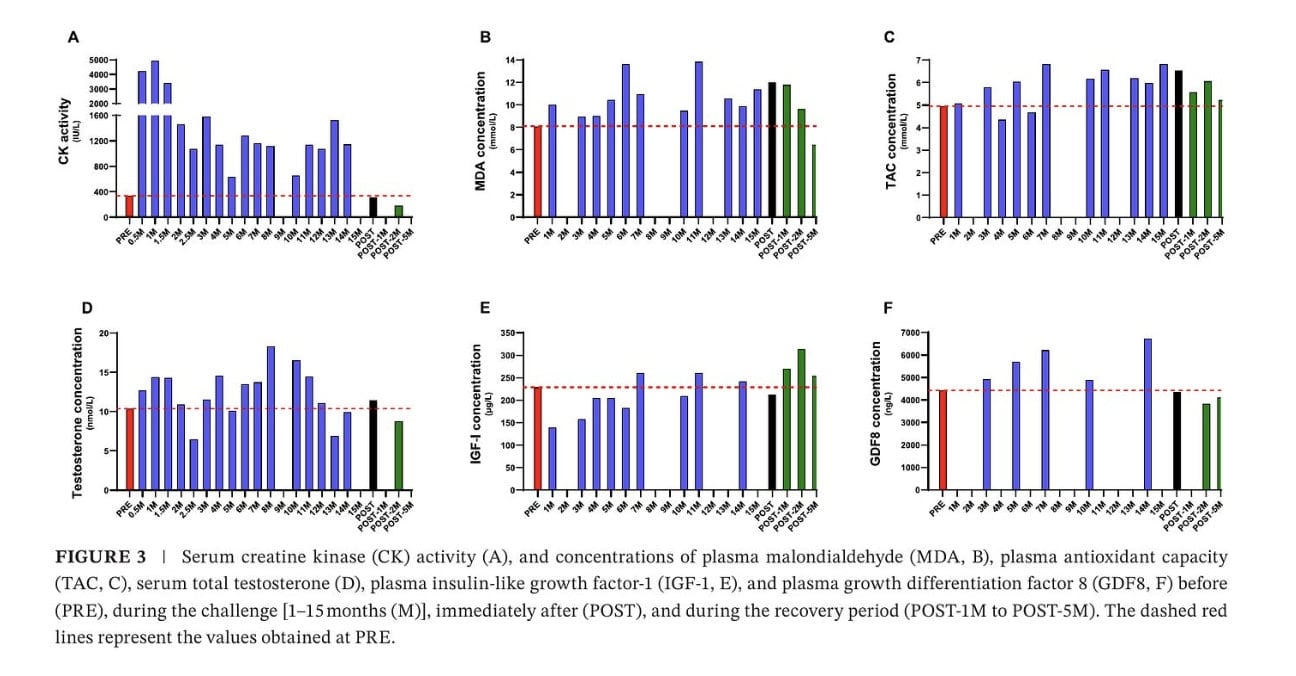
Muscle damage was persistent. Creatine kinase rose to about 15 times baseline during the first month and remained roughly three times baseline through much of the challenge. Markers of oxidative stress were elevated. Ferritin declined despite oral iron supplementation and two intravenous iron infusions, although he did not become anemic.
The performance losses were even more revealing. His jump height and power fell by roughly 35 to 50 percent, while his muscle’s ability to produce force declined about 25 percent. Strength recovered by 10 months, but explosive power and strength did not fully recover even 17 months later.
Muscle biopsies added a complicated picture. Markers involved in inflammation, apoptosis (a form of cell death), and autophagy declined during recovery, while proteins related to mitochondrial turnover and electron transport recovered or increased. Nearly all fibers remained slow-twitch type I fibers.
There were cognitive and psychological costs too. Between months 10 and 14, he reported episodes of forgetting his route and recent activities, as well as periods of reduced motivation and energy.
What this means for runners
Let’s be clear about what this was. This is a case report, not a general law of ultrarunning. Still, the case is valuable precisely because no conventional trial could ethically assign this exposure. It shows the difference between systemic resilience and local recovery. The heart, blood, and major organs can look surprisingly stable while muscle function, connective tissue, iron stores, and cognition carry a much longer debt.
This is not a training blueprint. It is an extreme demonstration that the ability to keep running does not prove that the body has absorbed the load. Pain can recede, blood work can look acceptable, and motivation can return before power and tissue function are restored.
High mileage is not automatically harmful, but unrelenting mileage without enough recovery can create costs that remain invisible until they are difficult to reverse.
References
RunClub — Free
Join 300,000+ runners in RunClub
Free training plans for every distance, a daily running game, exclusive coaching content, and a real community of runners. Create your free account in 20 seconds — no card.
Already a member? Log in →






Start the conversation